Your April 2015 Mosquito Lagoon & Indian River Fishing Forecast
Published: Wed, 04/01/15
|
Newsletter Issue # 68 Fishing Forecast April 1, 2015 |
||||||||
Mosquito Lagoon & Indian River Fishing |
||||||||
he Mosquito Lagoon and Indian River The windy fishing conditions we experienced this March will taper off and stabilize during April, which is why I consider April one of the best months to target gator sea trout, black drum, and redfish.
As the weather patterns become more and more stable during April and the following months, some of the best sea trout fishing of the year will be available to us. The strongest spring run of shrimp that we get in the Mosquito Lagoon and Indian River Lagoon systems usually coincides with the spring run of finger mullet that we experience in April. This provides the local fish populations with a more varied diet. Finger mullet, Pinfish, glass minnows, pigfish, mud minnows and shrimp are all on the menu for predators during April, and most of the redfish and sea trout this month will be actively feeding on these baits. Although Redfish will still hunt and can be seen tailing on shrimp and crab the year round, spring is when they start to really smash the schools of bait fish. Early morning fishing with noisy "walk the dog" type top water lures on the mullet filled flats will produce some of the most explosive strikes you will ever encounter in fishing. Gator sea trout have an up slung mouth that makes them tailor made for feeding on the surface. Their violent strikes will often send the fish and your lure completely out of the water into the air. I've had sea trout hit a Chug Bug or SkitterWalk completely out of the water and come back for a second, third, and even fourth hit. Unless they feel the sting of the hook, a hungry sea trout will continue to nail a well worked bait all the way back to your boat or to shore and will often smash it again as you pull it out of the water. Sea trout are ambush predators that like to lay in wait, much like Snook. If they strike at your bait, miss, and don't follow it; it always pays to make another cast to the same spot. You will often pick up another reflex strike from the same fish. Work your topwater baits at varying speeds until you start getting strikes. Start with a very slow retrieve and gradually speed it up until you get some action. Make long casts to catch the most wary gator trout.  When the morning topwater bite slows down and the sun climbs towards twelve o'clock, switch to fishing D.O.A. CAL baits rigged weedless, or paddle tail baits around the bait pods. When the morning topwater bite slows down and the sun climbs towards twelve o'clock, switch to fishing D.O.A. CAL baits rigged weedless, or paddle tail baits around the bait pods. If no mullet are present, move to another area. Fishing the bait pods during April is the name of the game for successful topwater fishing. According to the "powers that be", Peacocks Pocket Road should be open April 1st. This will give bank and wade fishermen additional access to some productive marsh areas and mud flats along the Indian River in the Merritt Island National Wildlife Refuge. Again, when the baitfish become more concentrated on the shallow flats, topwater Chug Bugs, Rapala Skitterwalks, MirroLures, Zara Spooks, Skitter Pops or Bomber Badonk-A-Donks will start producing vicious strikes in the early morning hours when worked around the bait pods. Suspending plugs, large silver or gold spoons, soft plastic baitfish imitations and of course live finger mullet will also catch big fish when worked around the bait pods. As the April showers cause water levels to rise in our Lagoon systems, the backwaters become flooded and the larger winter schools of redfish will split up into singles and smaller groups to invade the very shallow, newly flooded areas that you would not normally consider fishing. When this happens, look for tailing fish and the tell tale signs of moving sea grasses in very shallow (less than a foot deep) water. These are usually redfish or juvenile black drum that have invaded the shallows to forage for small baitfish, shrimp, and various species of crab that hide in the grass. There are some places around the southern section of Peacocks Pocket where you can sight cast to them with any bait resembling their forage. "Match the hatch" and you will probably get hooked up. Black Drum Although the cold fronts are still coming through our area, April is when normal springtime conditions move the Black Drum in the North Indian River Lagoon to start their spawning behavior.
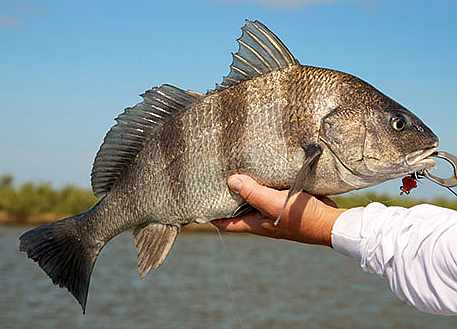 Unlike the huge adults, Juvenile black drum in the 5 to 10 lb category are good eating, especially in the springtime. Unlike the huge adults, Juvenile black drum in the 5 to 10 lb category are good eating, especially in the springtime.Most schooling fish will weigh in around 10 pounds but you can catch fish upwards of 20 pounds if you fish the deeper water bridge pilings. These fish are also decent table fare when taken earlier in the spring. A live or fresh dead shrimp, chunk of clam, or a section of fresh crab are "go to" baits for black drum, but I've used jerk baits on a jig head scented with some Pro-Cure Crab Oil with some success.
My neighbor used to soak his crab and shrimp flies in Pro-Cure Shrimp/Prawn oil when he targeted drum and redfish on the fly, and although he occasionally got skunked, it didn't happen very often. _________________________
Port Canaveral The structure around and inside of Port Canaveral and the North jetty has been popular with fishermen targeting Snook this past month. During the latter part of March and last week in particular, anglers have been "tearing them up" the Snook. 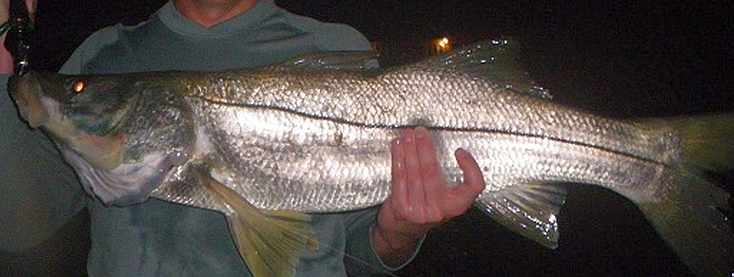 Pinfish and large mullet have been the best baits to use for these big mouthed linesiders but plugs and hair jigs also catch their share of fish. When "Snooking" with live bait, you can also expect to pick up a mixed bag of flounder, redfish, jacks and some Mangrove Snapper which are beginning their annual migration into the port. These little guys are hard fighters for their size and great eating on the table. __________________________
Near Offshore Fishing
This time of the year when the conditions are right offshore, Cobia can be caught within three to four miles of the beach.
Clean water, water temperatures between 67 and 70 degrees, manta rays, and a clear sunny day is all you need to sight fish for cobia on or near the surface.
Right now, the 50 to 60 foot depth range around Manta Rays and Leather Back turtles are holding fish and free swimming Cobia should be in abundance throughout the month. Weed lines, water color changes and temperature breaks around the 70 degree range can also hold fish. When you spot a fish, shoot a bucktail jig at it. If it doesn't fire on the jig, follow up with a live bait and that should do the job. Cobia are not usually very picky so almost any live bait will do. Use 50 or 60 pound braid as your main line with a 60 pound leader and an 8/0 circle hook when fishing live baits for Cobia. Try to cover a lot of ground when targeting springtime Cobia. Start out or finish in deeper water and run to the 20 foot depths or less. There are always good numbers outside of Port Canaveral and Sebastian Inlet during late March and early April.
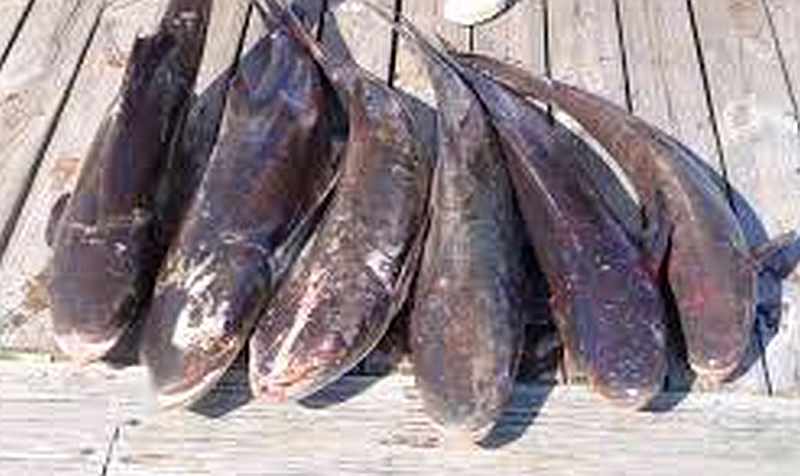 By mid to late April, good numbers of Cobia should be offshore of Ponce Inlet. Early Cobia are smaller fish under 40 pounds, but there is always a chance of catching a 60 pound or better heavyweight.
Although we are on the tail end of the smaller King Mackerel migration, the large smoker Kingfish (30 pounders) will start showing up in better numbers this month. Any of our local shipwrecks or reefs with structure that is holding bait will hold the larger Kingfish. Live baits this time of the year should be used to catch the big ones. You can use Sabiki rigs over structure for bait or cast net the bait pods. As the water warms up and the migration of pogies, herring, and finger mullet increase up and down our coasts, fishing will only get better. Surf Fishermen from Melbourne Beach up to Playalinda Beach can expect good catches of whiting, juvenile black drum, pompano, flounder, sheepshead and bluefish along the surf. Live or fresh dead shrimp, sand fleas, cut mullet and small jigs are baits of choice for these species. Fish for "bull" whiting in the closer troughs using short river rods with light lines and small hooks. Most fishermen use too large a bait for whiting. All you need is a piece of peeled shrimp the size of your "pinky finger" nail. A mess of fresh whiting is hard to beat on the dinner table. __________________________ Offshore Fishing Bottom fishing for grouper and throwback Red Snapper should be great this month on the offshore reefs and wrecks. Use live baits on three way swivels, knocker rigs or whatever you're comfortable with. For terminal tackle, use 80 to 100 pound leaders with 8/0 to 10/0 circle hooks. Gray Triggers and Black Sea Bass can keep you busy if you get tired of throwing back Red Snapper. Use a chicken rig with squid or small chunk baits and just enough lead to hold bottom. For Triggers, drop the rig to the bottom and crank up a couple of feet. They tend to hang just off the bottom. Amberjack will also keep you busy this month if you like dropping baits over the reefs. __________________________ Tripletail
Tripletail is one of the best eating fish in the ocean and April is when you begin to see them in the fish markets and around the ship channel markers at Port Canaveral.
Many fishermen looking for spring time Cobia find Tripletail among the weed lines, floating debris, crab traps and channel markers. Although they are smaller this month than they were in March, they are generally more plentiful when the weeds are present. 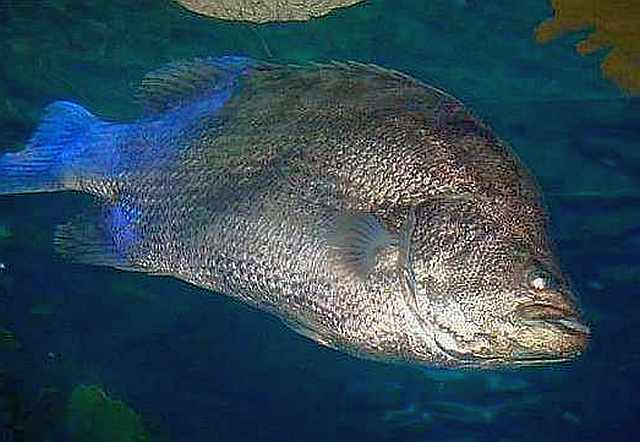 Tripletail are popular with small craft fishermen who find them throughout the month of April just outside the Port near floating weed lines, and other structure.
Fresh live shrimp, small jigs, D.O.A. shrimp or soft plastic paddletail baits fished on 8# to 10# braid with a 20# fluorocarbon leader will get you hooked up.
Sight casting is the preferred method of fishing for Tripletail, but blind casting around any floating or submerged structure can get you fish. Tripletail will often hang just below a crab trap anchor line or other floating debris, so even if you don't spot a fish it pays to drop a bait down to have a look see.
Always try to approach Tripletail from down current and downwind. This allows your bait to drift naturally toward the fish. Sport Shrimping
Although the shrimping from the two Titusville fishing piers has been getting better, the real news is that the Oak Hill shrimping is on fire.
The Pink River Shrimp in Oak Hill's Intracoastal Waterway usually run smaller than those netted farther south, but this year the size of the shrimp has improved. Most of the shrimp that have been caught are medium to jumbos. At Oak Hill, most of the "full pulls" are being made during a North flowing, outgoing tide. All the sport shrimpers I talked to agreed that an outgoing tide along with a Southeast or South wind, helps the shrimp run. The local sport shrimpers in Titusville have been getting some nice "pulls" but I have yet to see a full 5 gallon bucket on the pier.  Regardless of where you go, it's a lot of fun and the shrimp you net yourself are nothing like the shrimp you buy in the fish markets. Fresh caught river shrimp are super sweet and utterly delicious. All you need is a shrimp net, some lights, a 5 gallon bucket for your catch and some patience, (which I lack). A few adult beverages never hurts either. Here are some interesting facts about sport shrimping that may be of interest:
If you decide to go sport shrimping and you see few to no shrimp at the surface, remember that the shrimp you see on the surface are only a small part of what actually drifts past you below the surface.
If you like the taste of really sweet fresh shrimp, pack up your net, lights, and family members and head on up to the Intracoastal Waterway at Oak Hill during an outgoing tide. Till Next Month, Good Fishing & Tight Lines!
|
||||||||

| Link One | Link Two | Link Three | Link Four | Link Five | Unsubscribe to this newsletter |