Your October 2014 Mosquito Lagoon & Indian River Fishing Report
Published: Wed, 10/01/14
| Newsletter Issue # 62 Fishing Forecast |
October 1, 2014 | |||||||
Mosquito Lagoon & Indian River Fishing | ||||||||
The Redfish bite in East Central Florida has been off the charts these past couple of weeks and will continue throughout the month of October.
As the weather cools down in October, Redfish will be schooling in the Mosquito Lagoon, Bananna River and deepwater flats of the Northern Indian River just North of Titusville. For the past week, anglers have been catching large numbers of Redfish in and along the flats of the Mosquito Lagoon, North Indian River and Banana River as well as in the surf from Ponce Inlet down through Vero Beach, and in all three of our East Central Florida inlets.
Live finger mullet seems to be the bait of choice for most fishermen, but cut mullet chunks and chunks of Ladyfish on a VMC 7385 Circle hook have been working especially well on days when the bite has slowed down. The Redfish are holding in the mullet schools that are milling around in the flats and roaming along the shorelines, especially in the North Indian River at Titusville, Fl. around the Marine Patrol station.
Most of the Redfish caught are running between 16" to 30", but some true "Bull Redfish" over 45" long are being caught in the North Indian River deep water flats around Scottsmoor. 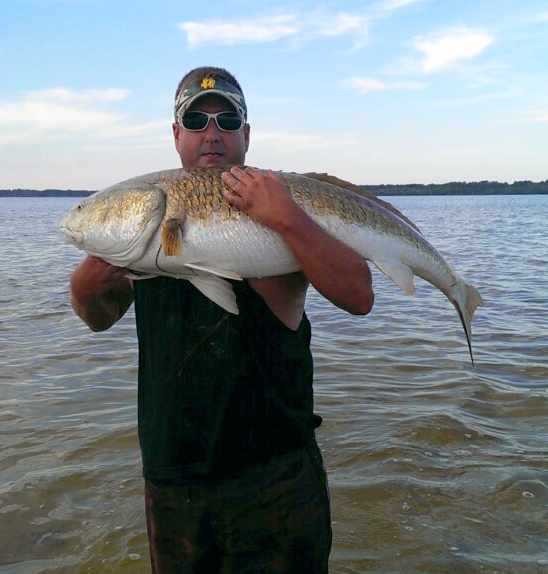 Ponce, Canaveral and Sebastian Inlets are on fire this time of the year for oversize Redfish, flounder and a variety of other game fish. These Inlet Redfish are pretty much "user friendly" and can be caught from the bank, a boat, a kayak or off the jetties on live and cut baits and a variety of artificial lures. When fishing the jetties, some of the largest fish are being caught at night by anglers using big baits on both the incoming and outgoing tides. Tarpon and big Ladyfish are roaming all up and down the lagoons busting glass minnows, finger mullet and chasing ballyhoo early in the morning. In the Mosquito Lagoon, the Tarpon have been hanging around the Tiger Shoals area and a little bit farther North. In the Indian River, the Tarpon can be found from Scottsmoor down to the railroad bridge, and from the Merritt Island area, down to about Satellite Beach. Don't forget to check the culverts in the Indian River for Tarpon, especially when water is flowing. A large pod of Tarpon has been holding inshore around the Coco Beach area this past week.
The lagoon Tarpon are running in size anywhere from 2 to 40 pounds and are being caught on flies, spoons and plugs. The XRap has been a particularly good producer lately. 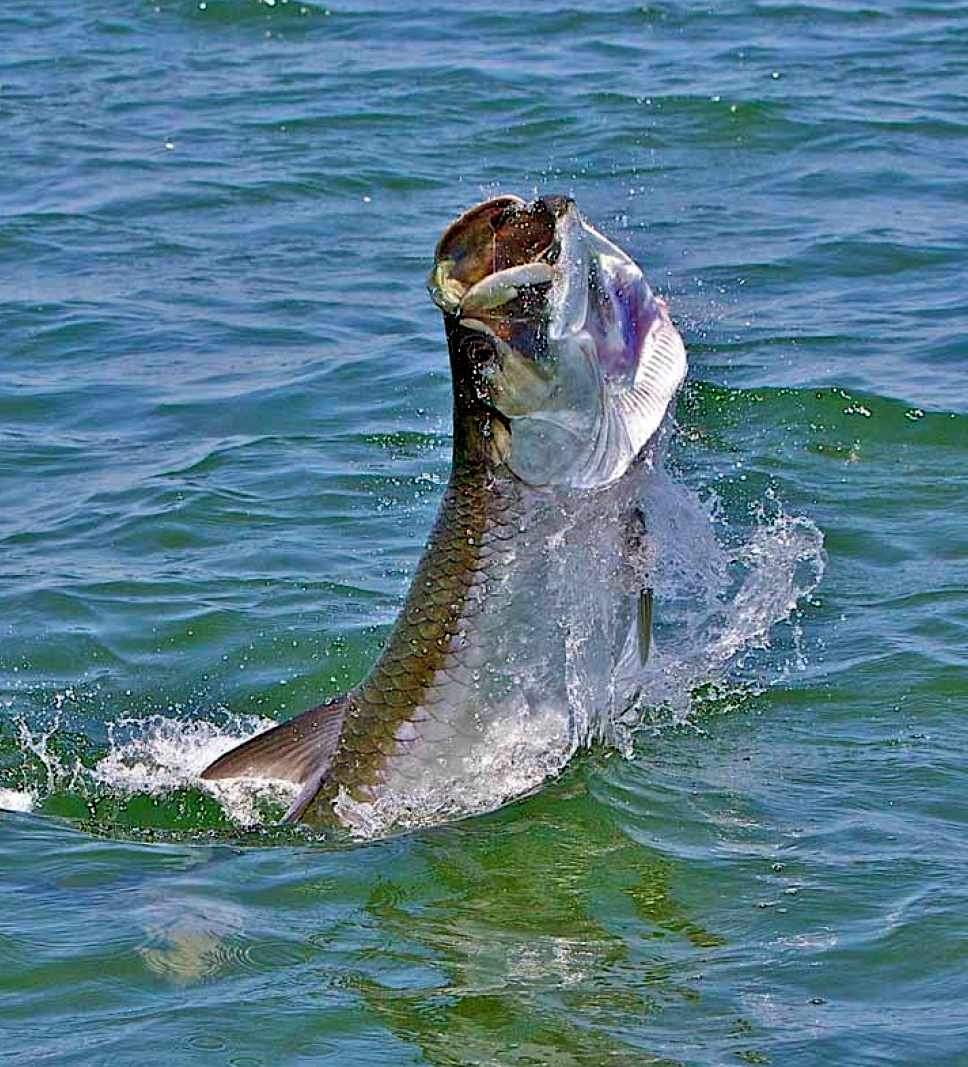 Along the beaches, look for Tarpon in the surf or just outside the surf line along the 10 to 20 foot depths. Along the beaches, look for Tarpon in the surf or just outside the surf line along the 10 to 20 foot depths. If you slow troll live pogies or mullet on a 7/0 to 9/0 VMC Circle hook using a length of 60 to 80# Suffix fluorocarbon leader, you should get a hookup.
Because Tarpon are also roaming the beaches in the surf close to shore, surf fishermen now have a great opportunity to catch them on topwater surface plugs. The Williamson Surface Pro is a popular bait that you can easily cast out past the surf break and bring back through the surf. In the Melbourne Beach and Satellite beach areas you can often see the Tarpon cartwheeling in the surf going after baitfish. Although Tarpon can be found almost anywhere near and inshore this time of the year, catching them on a surface plug from the beach is a real blast.
Most of our beach Tarpon are running between 70 and 115 pounds. Large "Gator" sea trout have also been going crazy in our region and should continue to please  anglers throughout the month. anglers throughout the month. The larger fish are following the bait pods and picking off stragglers.
Although nothing beats free lining a live mullet for big sea trout during this time of the year, topwater baits can produce just as well and sometimes better.
Fish early mornings, late in the evening at dusk or during overcast periods for the best topwater bite on artificial baits.
I'm particularly partial to Chug Bugs smeared up with Pro-Cure Saltwater Formula Gel  Vero Beach but Zara Spooks, SkitterWalks, MirrorLures and others work just as well when fished properly.
 _______________________
Surf Fishing, Inshore and Near Offshore:
During the fall baitfish run, almost every species of fish in the Atlantic Ocean can be caught within 5 miles of our East Central Florida beaches. The mullet in the surf will vary in size from 5" to 13" which makes them a prime target for all types of predators.  The flounder bite is going crazy right now offshore in the Ponce Inlet area, and is slowly trickling down to Port Canaveral and the Sebastian Inlet area. The flounder bite is going crazy right now offshore in the Ponce Inlet area, and is slowly trickling down to Port Canaveral and the Sebastian Inlet area. Use a live fingerling mullet on a 3/4 to 2 oz. jighead (depending on the current) to keep the bait just touching the bottom. Most of the flounder will be in the sandy areas around the offshore wrecks and not in the structure itself. These fish are running around 3 to 5 pounds with fish up to 9 pounds being caught.
The King Mackerel are moving around like crazy offshore from reef to reef. Most of the fish are hanging around the 60 to 70 foot reefs in the South and the 80 to 90 foot reefs in the North. Live mullet, sardines and pogies will be your best bet right now, but slow trolling with a ballyhoo over the reefs will also produce strikes.
The Kingfish are mostly in the 18 to 20 pound class with an occasional "smoker" king in the 40 pound category being caught. Slow trolling in the 30 to 40 foot depths will also hook you up with Tarpon, Bonito, shark, Spanish Mackerel as well as Kingfish. Offshore, the Amberjack are also on the reefs and wrecks in 180 to 250 feet of water. Use live baitfish or Williamson Vertical Jigs for these fish. Tripletail is another species that is just starting to show up in good numbers along the buoys out of 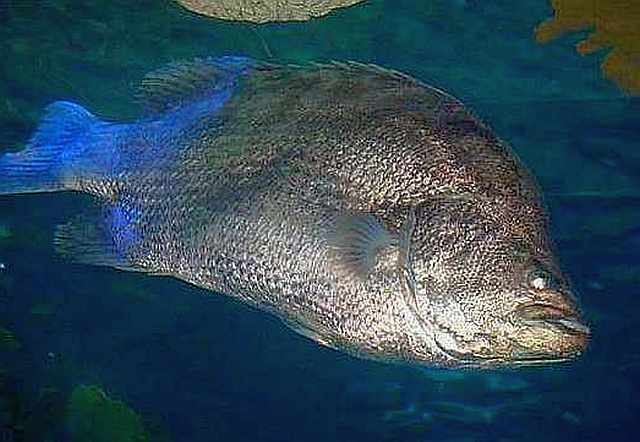 Port Canaveral and along our coastline. Port Canaveral and along our coastline. Look for any kind of cover or floating debris to find these fish.
Finger mullet, small crabs or live shrimp are all good baits to freeline for Tripletail.
Use a 25 to 30 pound test piece of flourocarbon in front of the bait to ensure a hookup. Right now most of the Tripletail that are being caught are in the 5 to 8 pound category, but as we get closer to Nov. and Dec. we will be getting the larger 20 to 30 pound fish moving into the Port Canaveral area. The high concentrations of baitfish so close to shore give surf fishermen and small boaters an opportunity to get in on some great fishing this month. You can count on catching something at almost any time of the day or at any stage of the tide.
Snook, Bluefish, Tarpon, a variety of shark, Flounder, Mangrove Snapper, Cobia and others will come within 100 yards of our beaches to feast on the schools of bait. Size your tackle and baits for the species you want to target and have at it!
Canaveral Bight:
The 5 mile stretch of water known as Canaveral Bight that starts at the Port and extends to the tip of the Cape is a top spot for a variety of predatory game fish.
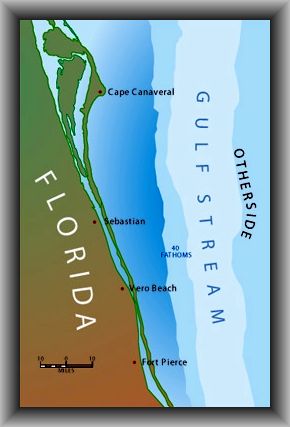 Canaveral Bight is part of the Cape Canaveral Air Force Station and since 9/11, it can only be accessed by boat; but the 15 minute trip from the Port Canaveral boat launches is well worth the effort during the fall baitfish run. Canaveral Bight is part of the Cape Canaveral Air Force Station and since 9/11, it can only be accessed by boat; but the 15 minute trip from the Port Canaveral boat launches is well worth the effort during the fall baitfish run.The narrow beach drops quickly into 10 foot and some 20 foot troughs where the schools of baitfish congregate in huge numbers. Snook, Redfish, Blues and Spanish Mackerel follow the deeper troughs close to the beach targeting the bait. Local guides and anglers bring their boats close enough to safely cast to the troughs and stay out of trouble of the unpredictable shoaling action. A live mullet on a one ounce split shot and a 40 pound leader will get you Snook and Redfish. Most of the Snook will be in the 10 to 15 pound range with some going over 20 pounds. You can also drift fish the deeper troughs for Redfish using a live pinfish or mullet fished directly on the bottom. The Redfish can run anywhere up to 30 pounds in this area. Till Next Month, Good Fishing & Tight Lines To You All! | ||||||||
| Link One | Link Two | Link Three | Link Four | Link Five | Unsubscribe to this newsletter |