Your August 2014 Mosquito Lagoon & Indian River Fishing Report
Published: Fri, 08/01/14
| Newsletter Issue # 60 Fishing Forecast |
August 1, 2014 | ||||
Mosquito Lagoon & Indian River Fishing | |||||
he Mosquito Lagoon and Indian River
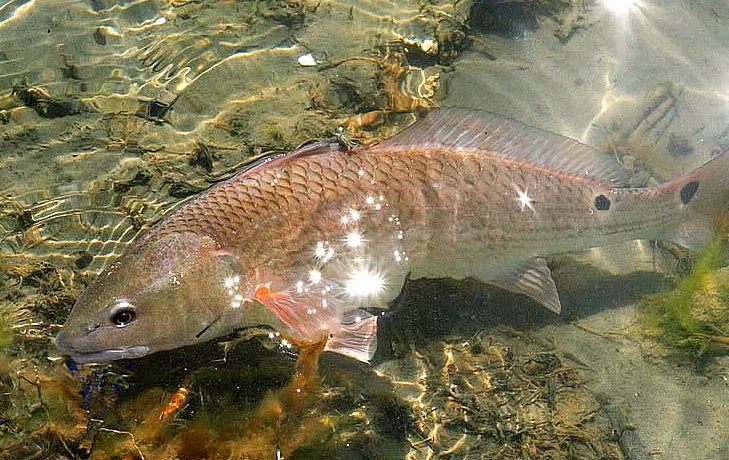
Redfish are all over the place especially in the northern Indian River and Mosquito Lagoons.
The last full moon slowed the bite down a little bit but the fishing has picked up since then with good numbers of big fish and some decent numbers of slot size redfish being caught. Throughout the summer months during July, August and September, the best advice I can give is to get out on the water early, before first light. With the exception of night fishing, the first few hours of the day is the only time to escape from the seasonal heat and getting a shot at actively feeding redfish and gator sea trout.
The slot size redfish are on the grass flats and cruising the shorelines foraging for mud minnows, finger mullet, shrimp, etc. in the early mornings, but move into deeper 3 to 5 foot depths off the flats around 9:00 am or so.... Use any of these live or cut baits to catch these fish or try casting a 4" saltwater assassin or DOA shrimp or Saltwater Assassin to them. The "Drunk Monkey" color has been producing really well. Top-water plugs are also giving good results on both redfish and
seatrout provided you're not hampered by too much floating grass.
On the very calm mornings when the water looks
like glass, you can get some vicious strikes from Chug Bug or walking type topwater baits. Once heavy ripples form on the water's surface, try
throwing a topwater plug with a rattle to stir up some action.
The larger "bull" reds are still holding in cooler waters along the deeper edges off the flats and along the ICW channel.
Live or cut pinfish, live mullet, ladyfish or crab have been working really well for these bruisers.
Offshore Fishing
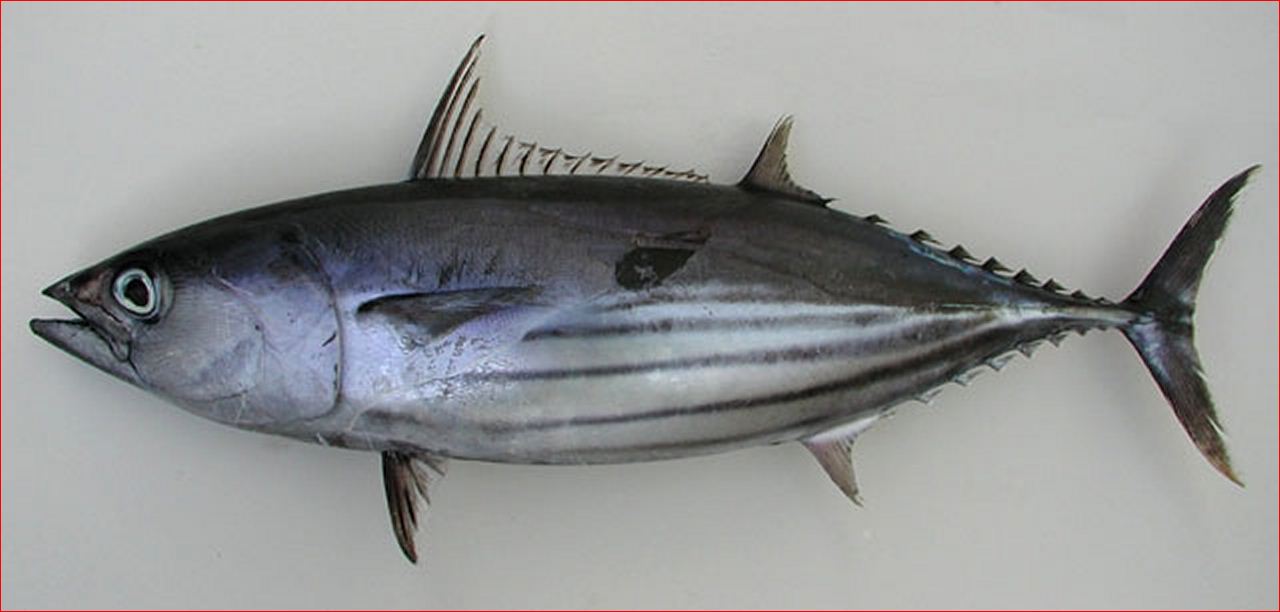
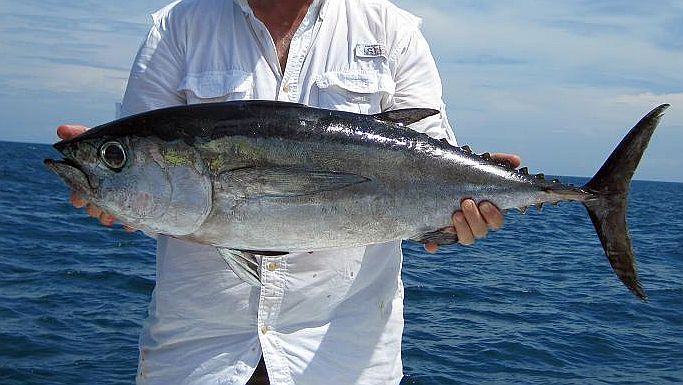
Yellowfin Tuna during the summer months are a prime focus of offshore anglers 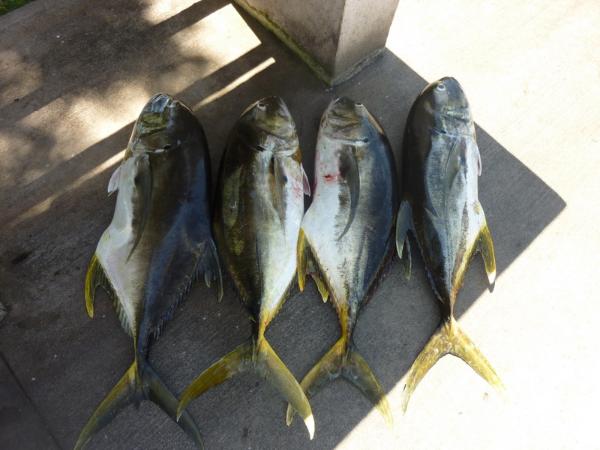 Dark colored trolling lures or high speed lures like the Williamson Speed Pro that can be pulled up to a speed of 14 to 15 knots are really popular with the guys going over to the east side of the Gulf Stream. You will need to run approximately 60 to 65 miles east of the mainland to get to the other side of the stream and then you need to start looking for birds that are working over the actively feeding schools of tuna. If you're heading out of New Smyrna Beach, you can find yourself running out as much as 100 to even 120 miles to find fish if you run to that 120 mile buoy, but on most days you will only have to run 75 to 90 miles to find the majority of the Yellowfin. While you're on the other side of the stream searching for Yellowfin tuna, don't be surprised if you pick up Skipjack and Blackfin tuna or even a Blue Marlin when dragging your baits. The average Yellowfin Tuna will run anywhere from 40 to 70 pounds, but fish up to 90 pounds are commonly caught. Red Snapper briefly opened up again the weekend of the 18th through the 20th and good numbers of big fish were caught out of Canaveral, Ponce and Sebastian Inlets. 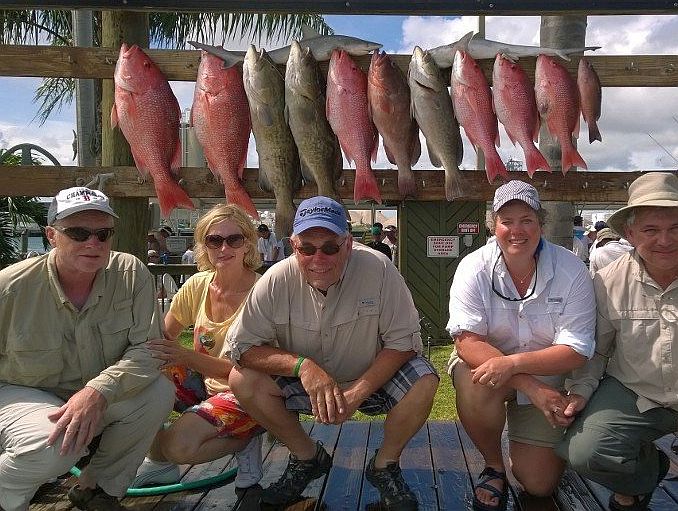 Live and cut baits were working really well on a standard bottom rig with VMC circle hooks. The bigger the bait, the better. Some guys were using vertical speed jigs with good success, especially on the large structure like the Cones and around large schools of sardines holding in the 21 fathom ridge area. Basically, you can find Red Snapper anywhere in 60 to 250 feet of water out of Port Canaveral where they are hanging just above structure. The average Red Snapper is running somewhere between 8 and 16 pounds, but some fish in the upper 20 pound to lower 30 pound class were caught.
Amberjack will keep your attention when the Red Snapper season closes.
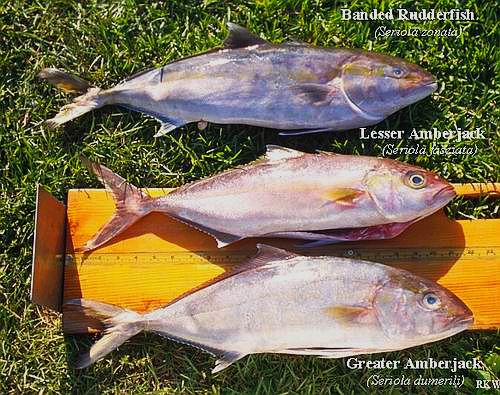 Most of the Amberjack caught in our region are Greater Amberjack but we also have Lesser Ambercack, Rudderfish and Almaco s over our reefs. Most of the Amberjack caught in our region are Greater Amberjack but we also have Lesser Ambercack, Rudderfish and Almaco s over our reefs.Greater Amberjack have been on "the cones" and over structure in 240 to 260 feet of water.
Live pinfish, croakers and sardines are the baits of choice for Amberjack in our area along with Vortex Jigs over structure.
The "reef donkeys" as they are affectionately named put up a bulldog fight, are easily caught and generally run anywhere from 30 to 60 pounds plus.
Cobia have been showing up offshore this week off of Port Canaveral in the 120 to 150 foot depths and around Sebastian in the 80 to 90 foot reefs by bottom fishermen trying to catch Triggerfish. Cut squid, sardines or menhaden are all good baits on a bottom rig or use large hookup jigs that work just as good. Most of the Cobia caught this past week have been in the 30 pound class.
Kingfish have been scattered around Pelican, 8A and the local
wrecks. Some Cobia are also showing up in these same areas on bottom drops where they often follow live baits to the surface.
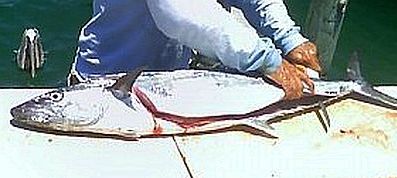 Use bucktail jigs or live baits to catch them near the surface when you spot them.
Along with the Red Snapper, the Grouper and Amberjack bite has been great these past weeks.
Again, the bigger the bait, the bigger the fish.
This month, Port Canaveral's main channel and turning basins can be a great place to target smoker kingfish. Except for a small band of locals, this limited East Central Florida fishery is usually overlooked by most anglers however, when large schools of menhaden (pogies) and mullet are in the 40 foot depths, you can count on finding varying sizes of kinggish to be right along with them.
The main channel at Canaveral is 3 1/2 miles long with the large deep water turning basins connecting from the north side.
The first Trident basin yields the best numbers of kingfish but is off limits to boaters. The middle basin is part of the main section of the port and has some limitations but is the best area for kingfish. From the middle basin to the port entrance is usually productive.
Lately, the west basin with the cruise ship docks has been closed whenever a ship is docked.
Slow trolling large 10" mullet 30 feet or so behind your boat from the entrance to the port into the middle basin may well get you a smoker king when the baitfish are thick.
Shark are being caught all along the near shore waters and the beaches on a variety of live and cut baits. Use wire leaders to minimize cutoffs.
Most of the shark are relatively small and are less than 5 feet in length however, the "scalloped" hammerheads are running in the 7 to 9 foot category. You never know what you're going to catch. It could be a 2 foot long shark one time and a 7 foot long hammerhead the next.
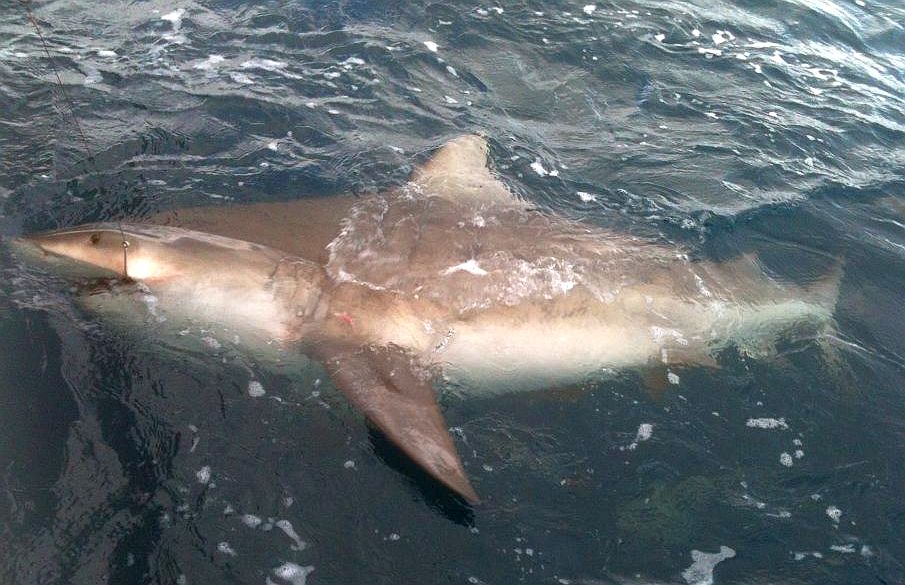 Bull Shark Bull Shark are moving into the Indian River right now following the schools of baitfish and to bear their young. Last week a kayaker reported a large bull shark following a school of redfish in the Nort Indian River where he was trying to catch a red. Be careful wading.
______________________ Haulover Canal
As water temperatures continue to rise, Haulover Canal fishermen should be bringing in some
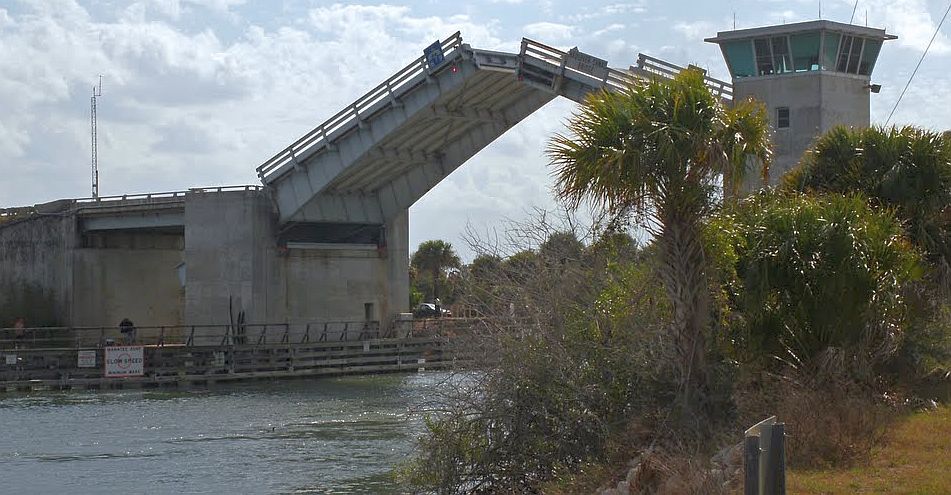 nice catches of oversize Redfish, Black Drum, Snook and Sea Trout in the evenings. nice catches of oversize Redfish, Black Drum, Snook and Sea Trout in the evenings.The boat fishermen in Haulover Canal have been pulling in
some nice Redfish and Black Drum using quarter pieces of fresh crab,
live mullet and fresh cut baits. Use a weighted rig with a VMC 7685 circle hook. You can expect good fishing for bull redfish, black drum, sea trout, snook and an occasional tarpon at Haulover throughout the summer months. I haven't had many reports about the summer shrimping activity in the canal but last reports indicate that the pulls were sporadic as is usual for this time of the year.
You will probably not get 5 gallon pulls during the warmer summer months but the shrimp you do harvest will be much larger than those caught farther north in the ICW around Oak Ridge.
Till Next Month, Good Fishing & Tight Lines To You All! | |||||
| Link One | Link Two | Link Three | Link Four | Link Five | Unsubscribe to this newsletter |