Your July 2014 Mosquito Lagoon & Indian River Fishing Report
Published: Tue, 07/01/14
| Newsletter Issue # 59 Fishing Forecast |
July1, 2014 | ||||
Mosquito Lagoon & Indian River Fishing | |||||
Mosquito Lagoon and Indian River
We hope you all enjoy a safe Independence Day this 4th of July.
Tons of mullet have moved into the Lagoons making for an excellent topwater bite mostly in the mornings. The summer heat has kicked in and changed the feeding habits of the redfish population in the both the Indian River and the Mosquito Lagoon systems.
The higher air and water temperatures have seen the sea trout and redfish schools hanging closer to the deeper, cooler waters of the ICW. Last week anglers working the spoil islands and sand bars close to the ICW channel with the Rapala XRap model XR08 in the Olive Green color were picking up some nice sea trout and redfish, but any suspending or topwater lure will work just as well. Most of the fish that were caught averaged 4 to 8 pounds, with some going much larger.
Redfish, Sea Trout, Bluefish, Jacks and Lady fish have also been hitting MirroLure Top Dogs and Top Pups in the Mosquito Lagoon.
When the topwater bite slows down, switch to soft plastics like the D.O.A. CAL shadtails and jerkbaits in the Fiji Chix, Silver Mullet, Bayou Tiger and Green Back colors. Hookup jigs and Houdini colored saltwater assassins on a weedless worm hook are also producing some nice fish around the ICW. For those fishermen who don't care to toss artificial lures, the live bait guys are really tearing them up. The anglers who are using large live mullet or cut ladyfish during the middle of the day are picking up some nice oversize redfish with some in the 40" plus category.
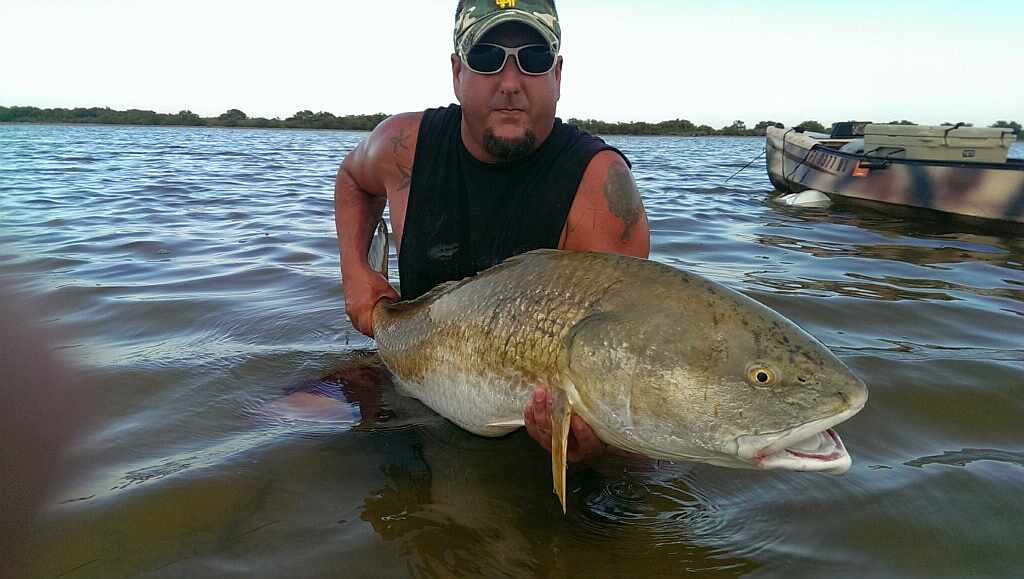
The Bull Redfish below was caught on a live 10" mullet and measured in at 48 inches.
 The trick is to anchor your boat around the schools and not to move around much. Just let the fish come in to find your baits.
At times there is a lot of floating grass in many areas of both lagoons. Although this makes artificial bait fishing difficult, it helps in locating the sand bars where the Redfish, sea trout and baitfish are hanging.
The really big "bull" redfish in the 40 to 50 inch range are now schooling up in the mornings on the deeper edges of the shallow sand bars in the Mosquito Lagoon and the northern Indian River Lagoon system.
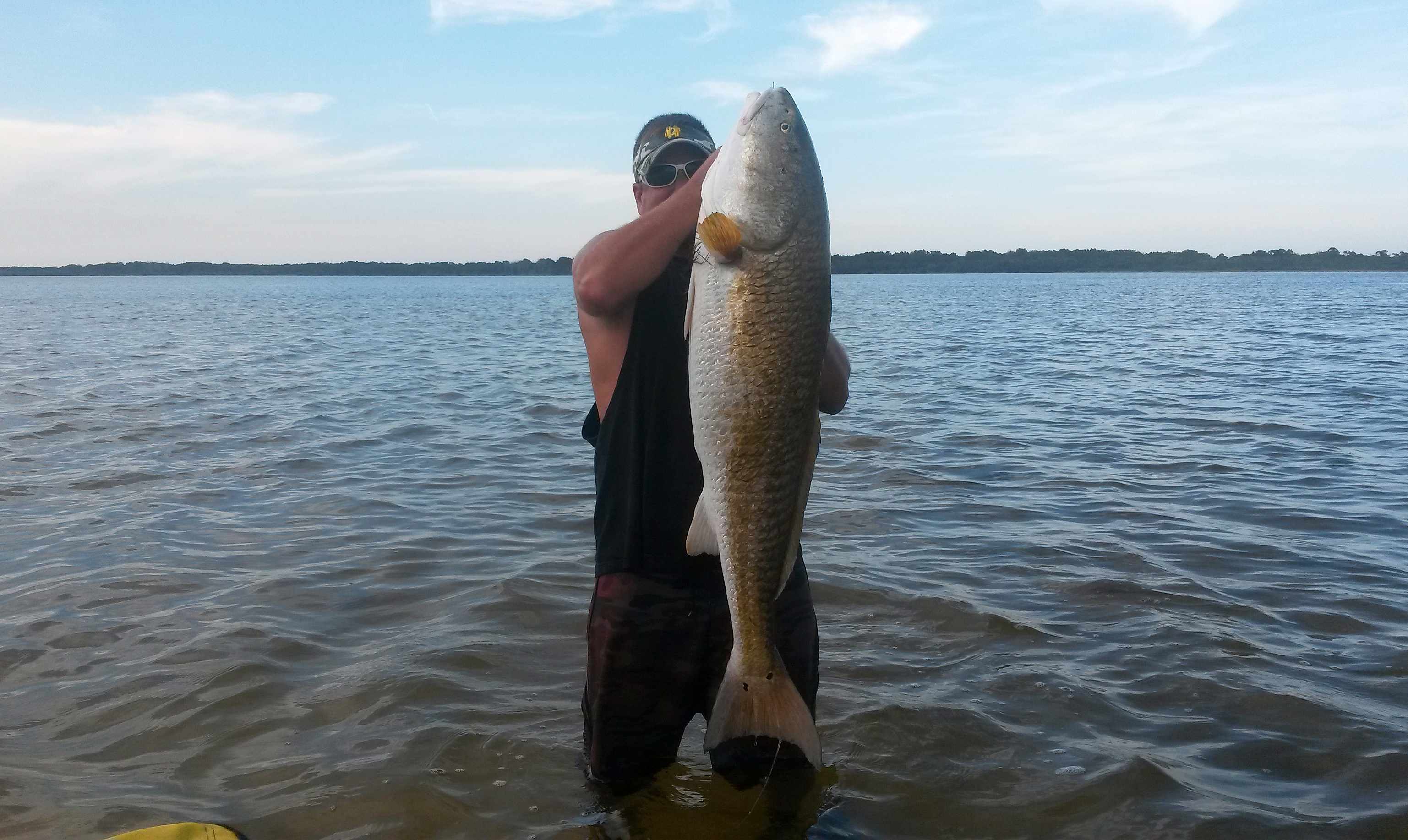 As the air and water temperatures warm up later on in the afternoons, the schools have been moving into the deeper flats and into the cooler waters of the ICW and Haulover Canal. The guides are reporting that the easiest way to catch the big Bull Reds is with a live pinfish, a large silver mullet, or blue crab rigged on a 6/0 vmc circle hook tied to a fluorocarbon leader on a sliding sinker rig.  This type of activity should continue in our area throughout the summer months.
Right now some nice sea trout can also be found in the 3 to 6 foot depths on the deeper flats and around the spoil islands adjacent to the ICW.
Small jigs, diving plugs or assassin sea shad tails smeared up with a little Pro-Cure scent should get you hooked up. During low light conditions and at dusk you can still try fishing topwater baits for gator sea trout. As the temperatures continue to rise into the 90s, look for ladyfish and small tarpon in the ICW, residential canals and flats of both lagoons.
These inshore fish can be as small as 10 pounds and get as big as 100 pounds. The smaller Tarpon in the residential canals have been feeding on glass minnows and can be caught on pilchard style flies and lures.
A small 2 inch panfish assassin bluegill or crappie bait on a hookup jig head works well on these fish or, in the heat of the day when they are most active, you can toss standard topwater plugs like the Heddon Zara Spook, the Rapala Skitter Walk or
a Storm Chug Bug.
Live bait fishermen have been using live mullet and fresh cut baits with a great deal of success.
_______________________
Playalinda Beach & South Surf Fishing
The whiting are still thick in the surf at Playalinda Beach and along most of the beaches in Central Florida.
Sand fleas and "pinkie nail sized" pieces of shrimp are the baits of choice for whiting. Although most surf fishermen will be using long surf rods with two or three hook dropper rigs 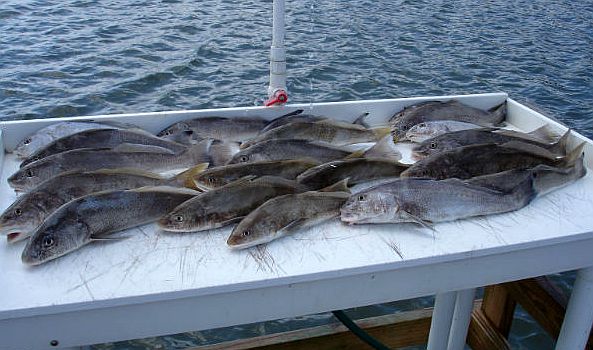 and 2 oz. to 5 oz. of lead to send their baits out past the breakers to catch pompano, blues or mackerel; other anglers using short 7 foot "river rods" are catching more than their share of whiting by making short lobs to the nearest inshore troughs where the whiting are hanging. and 2 oz. to 5 oz. of lead to send their baits out past the breakers to catch pompano, blues or mackerel; other anglers using short 7 foot "river rods" are catching more than their share of whiting by making short lobs to the nearest inshore troughs where the whiting are hanging.Regardless of which type fish your are targeting or which method you are using, surf fishermen who get out early in the morning, regardless of the tide, are the ones who usually bring home fish. Whiting are a very accommodating fish and will usually bite throughout the day, however the best bite usually occurs early in the morning from the middle to the end of an incoming tide. Making short casts to the deeper troughs just a few feet out from shore with conventional river tackle and a barrel sinker heavy enough to keep your bait on the bottom is all you need to do to load up your cooler with fish. Use small hooks and small baits for these fish. A peeled "pinkie nail" size piece of shrimp is all you need to catch these small mouthed fish.
July is also a prime month for many surf fishermen who enjoy fishing for shark from the beach. 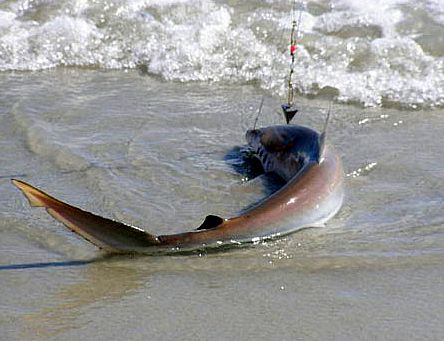 Black tips, Bonnet Heads, Bull and Nurse Sharks can be caught this month using a variety of live or fresh dead baits. Black tips, Bonnet Heads, Bull and Nurse Sharks can be caught this month using a variety of live or fresh dead baits.A large foot long mullet with a bait hook on a sliding sinker rig is all you need to hook up with one of these bruisers from the beach. Use a 10/0 or larger VMC circle hook on a short piece of heavy wire leader or a long length of 80 to 100 pound fluorocarbon leader to increase your hookup ratio and reduce cutoffs. Big baits will catch big sharks and a stingray or Bonito is an excellent choice for hammer heads or large bull sharks. The challenge for surf fishermen using big baits is getting your bait out past the breakers to where the fish are most likely to be feeding. A surf board or kayak is one way to get your baits out to where the fish are, but for your safety, keep your baits wrapped in a plastic bag until you drop them. It's also a good idea not to shark fish around crowded beach areas. Swimmers tend to freak out when someone brings in a big shark. I know from experience. _______________________ Near Offshore Fishing Right now the larger offshore tarpon are hitting crabs, mullet and pogies (menhaden shad) in the 15 to 25 foot depths and along the contours where the depth starts in 10 to 12 foot of water and roll down to 25 or 30 feet.
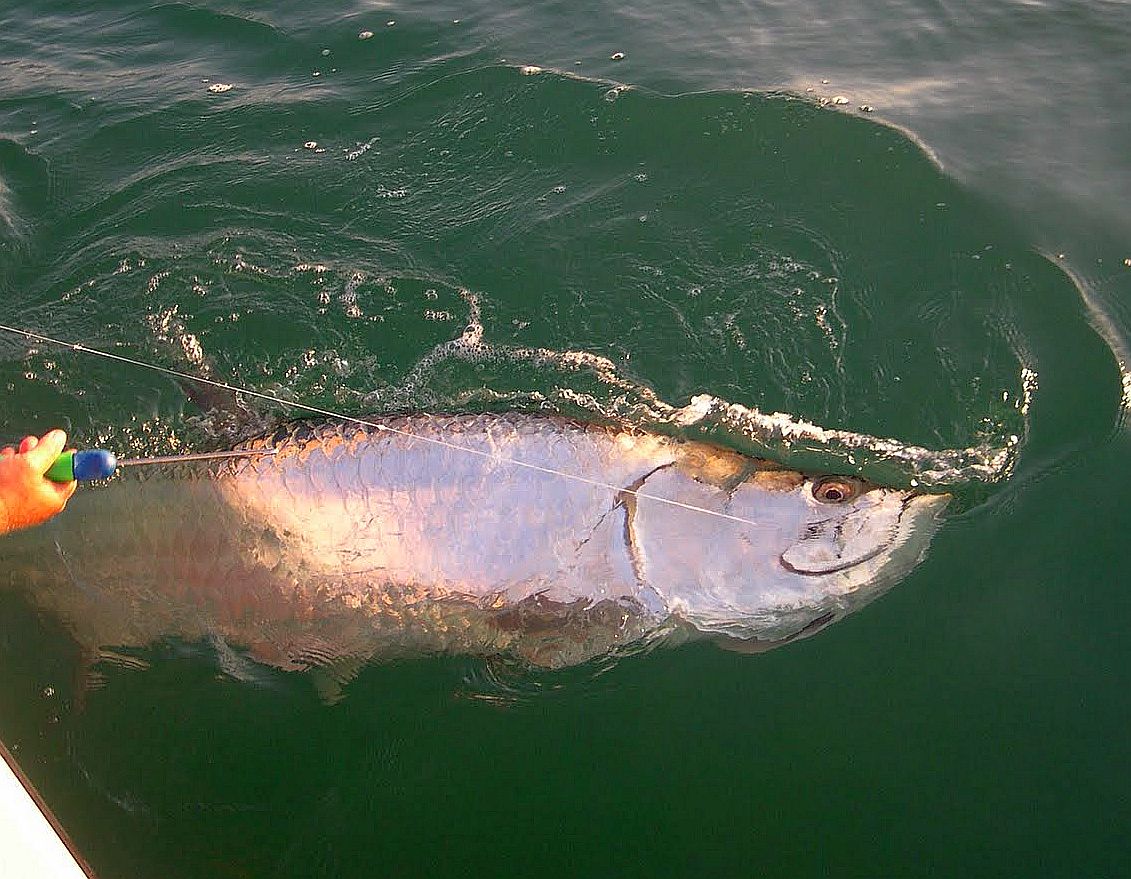 As the day goes on, the fish tend to go deeper along those contours. As the day goes on, the fish tend to go deeper along those contours. Hook your live bait on a VMC 7385 circle hook and a piece of 60 to 80 pound fluorocarbon leader depending on how clear the water is and you'll have a good chance of hooking one of these silver kings offshore. While fishing for Tarpon using live baits you will also encounter sharks along the beaches.
Spinner sharks, black tips, golden duskies, bull and sharpnose
are just a few of the species you will run into if you slow
troll or drift in 20 to 50 foot depths or closer to the beach.
If you are targeting shark, use live or cut baits on a heavy wire leader and 10/0 VMC circle hook. Most of the sharks being caught offshore are running in the 10 to 50 pound range, however fish over 80 pounds are also being caught on a regular basis. If you are slow trolling live pogies in the 10 to 40 foot depths right now, you will probably run into a mixed bag of shark, tarpon, bonito and jacks. Offshore Fishing If you can get your cut baits past the Red Snapper, Gray Triggerfish, sea bass and Gag Grouper are plentiful on the 21 fathom ridge.
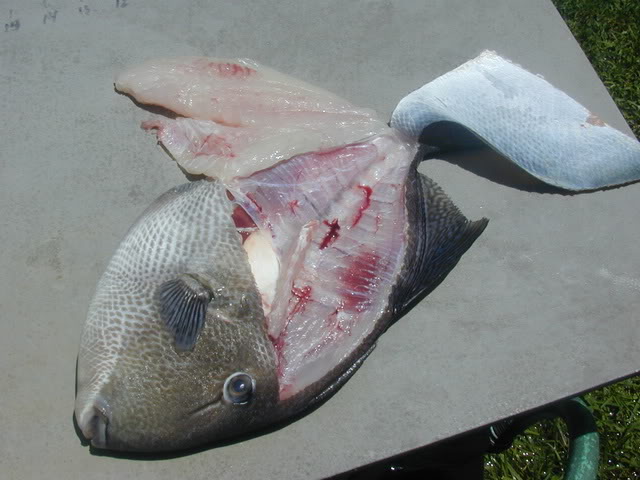 To catch a mess of tasty triggers, use cut baits on a standard two drop chicken style rig.
The Triggerfish are averaging two to three pounds with an occasional fish up to five pounds.
The 21 fathon ridge is also producing Gag Grouper and sea bass. Use live pinfish, pogies or croaker on a standard bottom rig with an 8/0 to 10/0 VMC circle hook for these fish.
Live sardines on a standard bottom rig have also been producing some nice catches. ________________________ Haulover Canal
As the water temperatures continue to rise, Haulover Canal fishing gets really good.
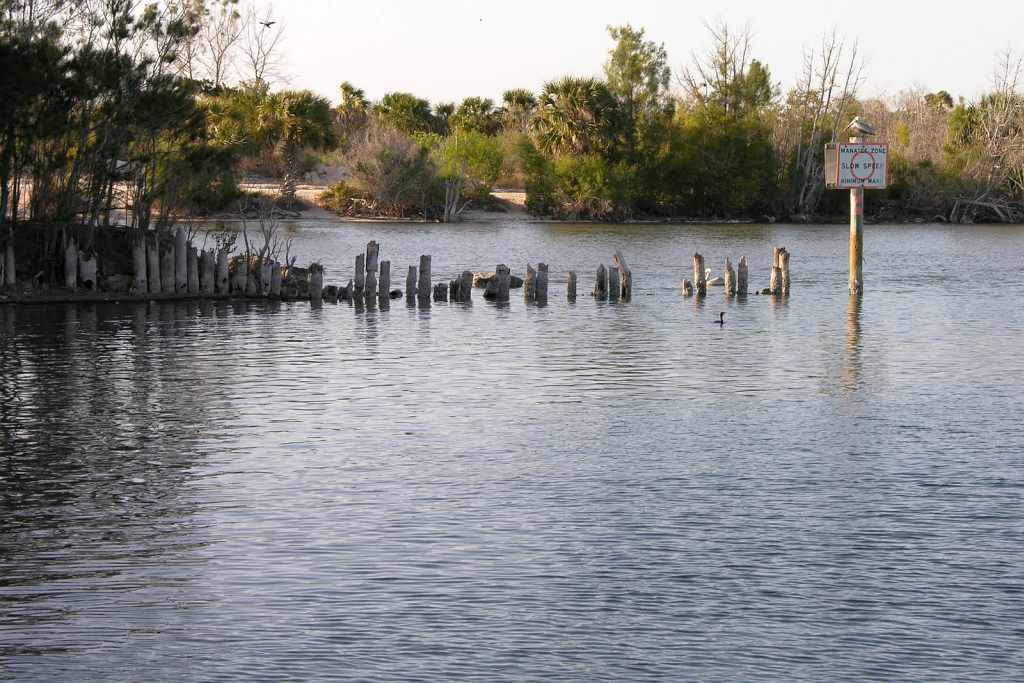 You can expect some great fishing for bull redfish, huge black drum, sea trout and an occasional tarpon at Haulover during the summer months. You can expect some great fishing for bull redfish, huge black drum, sea trout and an occasional tarpon at Haulover during the summer months.Unfortunately for bank fishermen, you can also expect a lot of break offs from the Coquina outcroppings when you do hook up to a nice fish.
The boat fishermen last week were pulling in some nice bull reds and black drum on quarter pieces of fresh crab, live mullet and a variety of fresh cut baits.
Summer shrimping activity in the canal is also expected to increase during the upcoming month. Our Brevard County Indian river shrimp are landlocked and grow much larger than those farther north in the ICW around Oak Hill.
Because of the 32ppm
salinity in our lagoon systems, the shrimp believe they are in the ocean, do not migrate, and continue to grow throughout the year.
Although you will probably not get full 5 gallon pulls during the warmer months, the shrimp you harvest will be much larger.
Till Next Month, Good Fishing & Tight Lines To You All! | |||||
| Link One | Link Two | Link Three | Link Four | Link Five | Unsubscribe to this newsletter |