Your June 2014 Mosquito Lagoon & Indian River Fishing Forecast
Published: Sun, 06/01/14
|
Newsletter Issue # 58 Fishing Forecast June 1, 2014 |
||||||||
Mosquito Lagoon & Indian River Fishing | ||||||||
he Mosquito Lagoon and Indian River
Despite the slow fishng report this past week, redfish and sea trout in the Mosquito Lagoon are everywhere and June should be another great month for catching them.
There are also a good number of small tarpon, ladyfish and jacks
moving north up the IRL shadowing the pods of glass minnows and finger
mullet.
The Tarpon run offshore is in full gear. They are cruising the beaches eating pogies and roaming the lagoons eating finger mullet.
The smaller lagoon Tarpon are running anywhere from 10 to 80 pounds and the beach Tarpon from 50 to 150 pounds.
The smaller "lagoon" Tarpon are a blast to catch and with the summer rains in sight, they will be rolling in the ICW and inside the freshwater creeks and canals.
The steady runoff from the rains flush the Gambusia minnows, shiners, small bluegills and other baitfish into the drainage culverts, spillways, run in points from backwaters and sloughs, or anywhere water is moving, and the Tarpon and ladyfish follow.
The running culverts around Shiloh Marsh road this month are all potential hotspots for lagoon Tarpon and Ladyfish.
Catching ladyfish and small Tarpon on light tackle or on a fly is great fun, even if you only land one in five fish. The fast and furious jumping action that these fish provide is hard to beat. 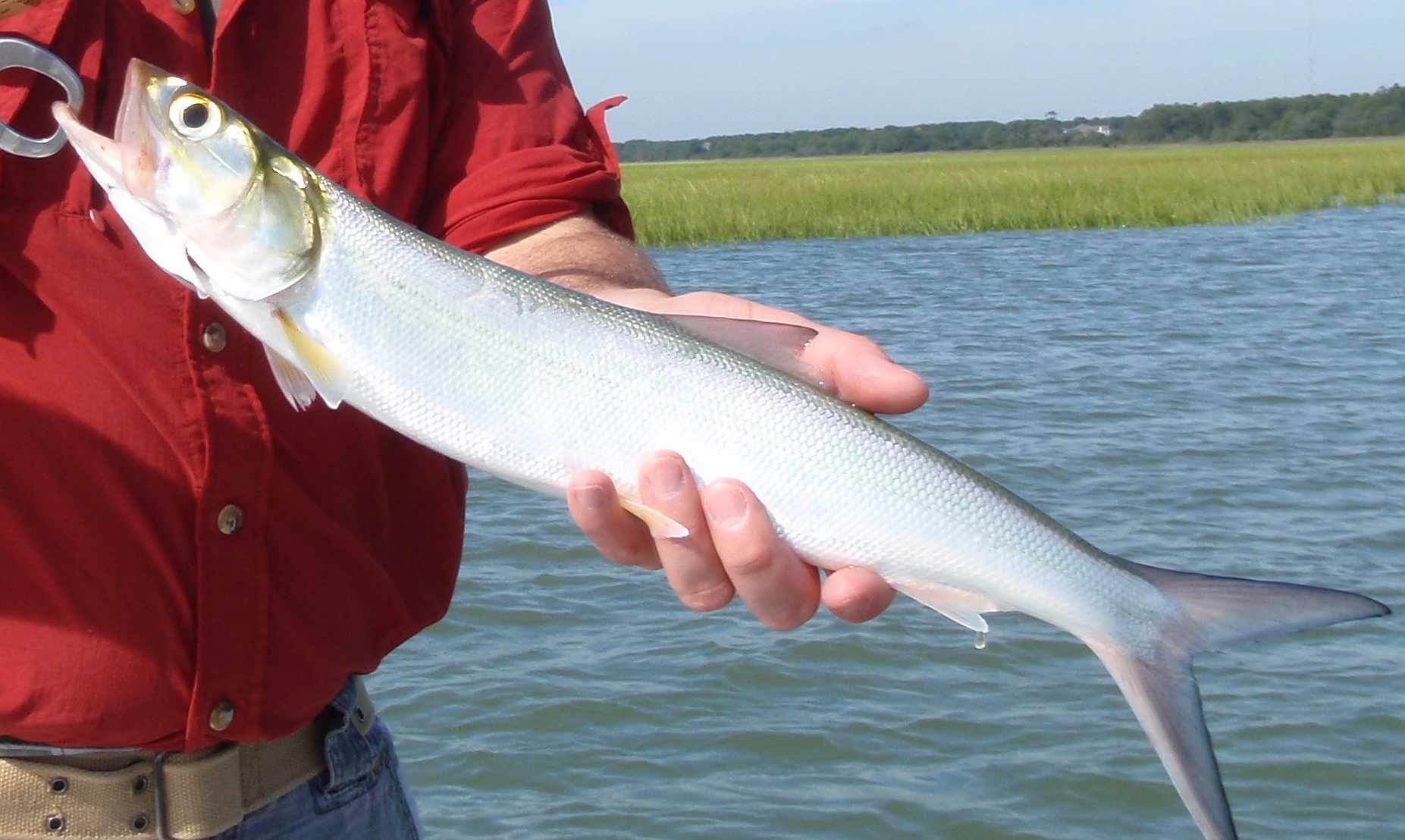 Around New Smyrna Beach, anglers are casting 1/8 oz. to 1/4 oz. hookup jigs for redfish along the 3 to 5 foot dropoffs and deeper flats with great success. Most of the reds being landed are in the lower 30" range.
If you're not into casting jigs or artificial baits for redfish; cut baits or live finger mullet seem to be working really well in those same 3 to 5 foot depths. A fresh cut chunk of ladyfish is "redfish candy" and the trout don't often pass it up either.
Try fishing live finger mullet under a Cajun Thunder rattling float to make the bait more attractive to the reds and sea trout.
The
rig keeps the finger mullet from burying themselves into the
grass and the distinct click/rattle of the float pulls in redfish and sea
trout from quite a long distance. 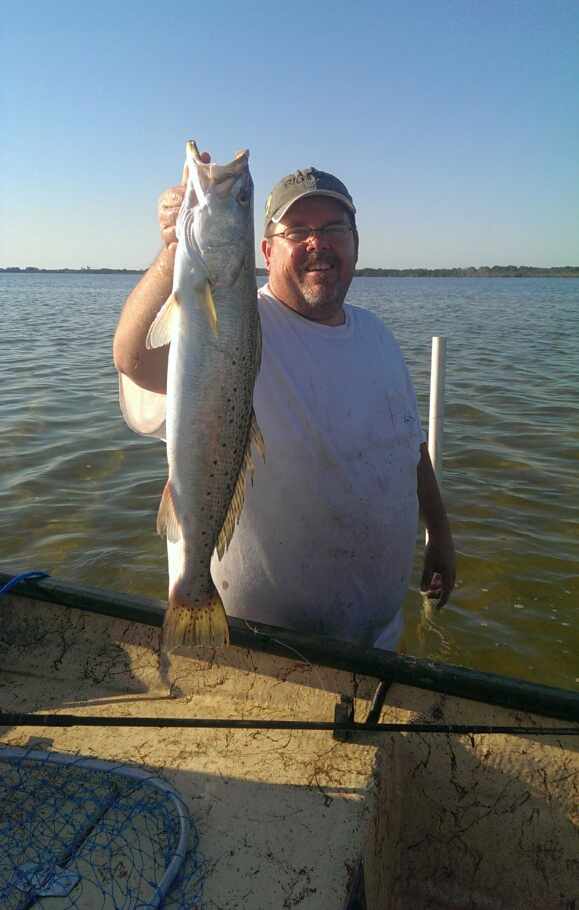 As of this past week, the big gator sea trout are running right along with the redfish,
but the biggest sea trout are still in really, really, shallow water
around the mullet pods. As of this past week, the big gator sea trout are running right along with the redfish,
but the biggest sea trout are still in really, really, shallow water
around the mullet pods. Long casts with live fingerling mullet is the
ticket for these wary fish or, if you like casting artificial baits, the
small size SkitterWalk or the new BX Walking Minnow is really hot when there is a ripple or a slight chop on the water.
The trout pattern Skitterwalk is a killer especially when you smear them up with Pro-Cure.
When the waters are calm or later on in the day towards evening, try using a saltwater Assassin or that new vapor shad rigged on a weedless worm hook. This setup is great for keeping the floating grass off your bait or for fishing in super shallow, weedy water. Most of our sea trout are averaging 15 to 20 inches in the Mosquito Lagoon, but a lot of fish over 30 " are now being caught mostly in the Northern Indian River.
_________________________
Surf Fishing Whiting is one of the sweetest tasting fish in the ocean, and the months of May and June is a peak time for Whiting along the Atlantic surf in East Central Florida.
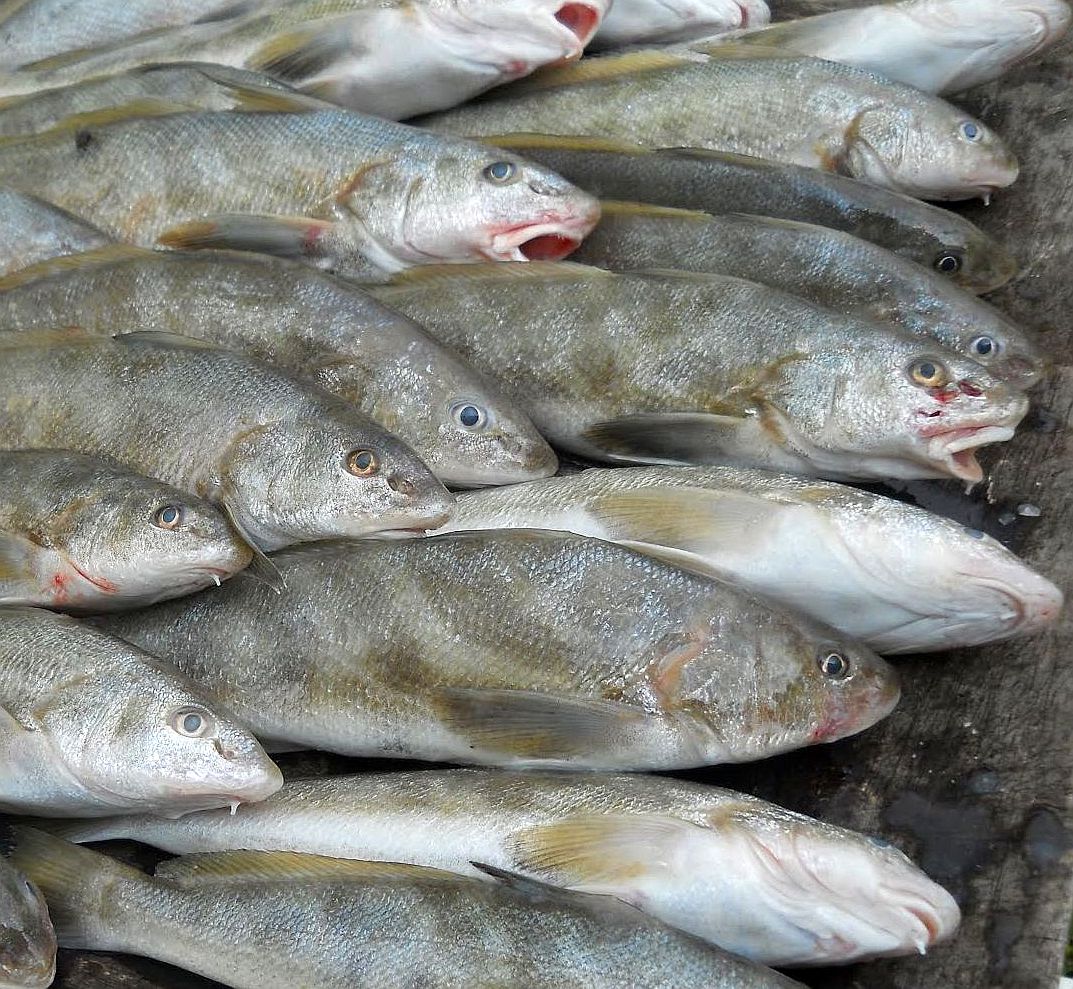 The main problem with Whiting is that they generally run less than a pound, so you need a mess of them for a decent meal or a fish fry. The main problem with Whiting is that they generally run less than a pound, so you need a mess of them for a decent meal or a fish fry.Whiting are now in their spawning mode and the larger "bull" whiting (spawning females) are in the surf in larger numbers, making them easier to catch.
The deeper surf zones like those along the Canaveral National Seashore south of New Smyrna Beach, Playalinda Beach east of Titusville, and the stretch of beach between Melbourne Beach and Sebastian Inlet are historically the best places to target "southern kingfish", but anywhere you find a deeper trough or hole is a potential hot spot where they gather to feed.
Unless you are going after Pompano, you can put away your long surf rods and heavier
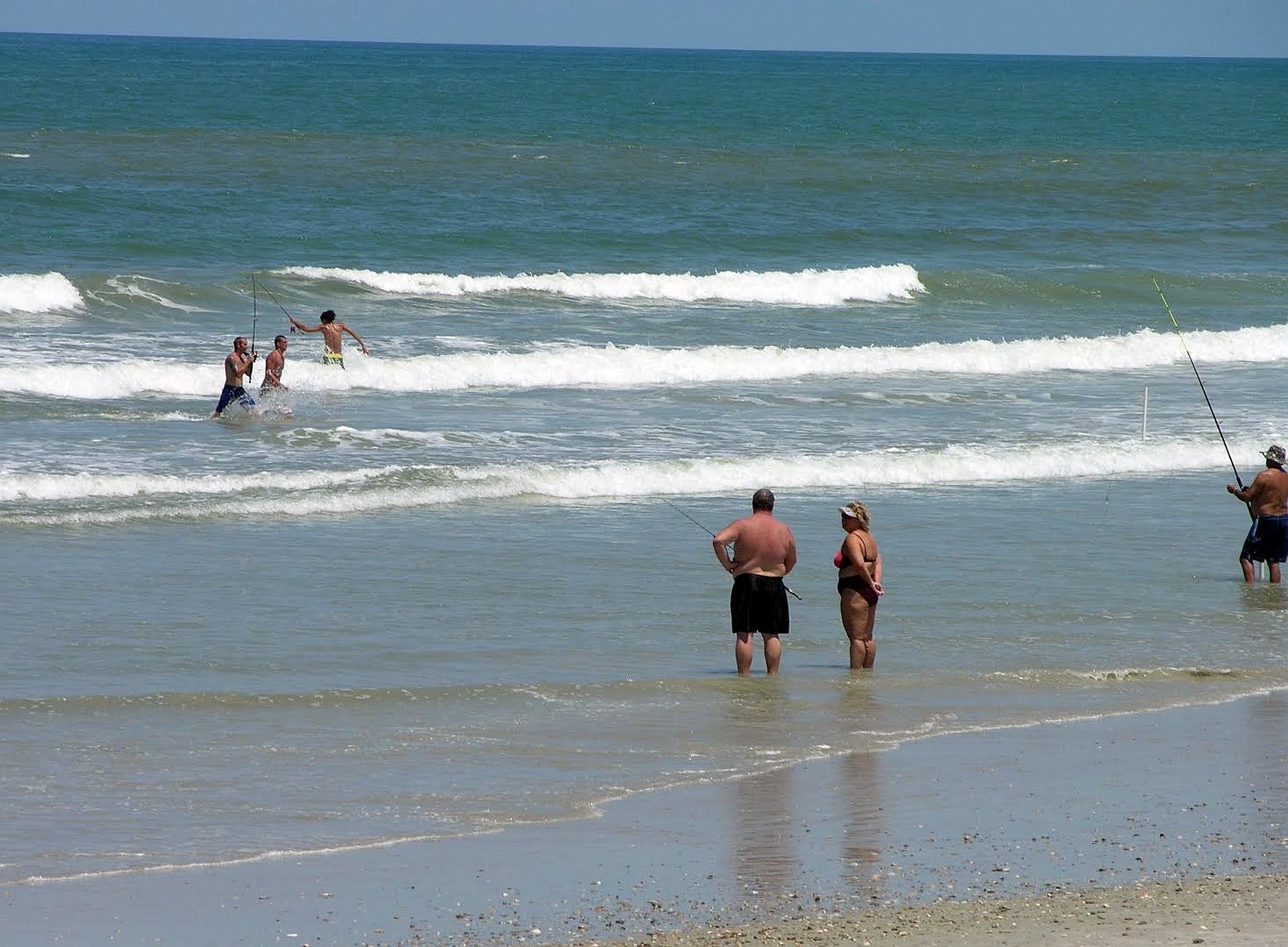 terminal tackle this month. terminal tackle this month. If you're after Whiting, pull out your light 7 or 8 foot river rod instead.
The fish are generally going to be closer to the beach and in the troughs where a simple flip cast will do the trick.
Spool your reel with 8 or 10 pound mono and rig it with a sliding sinker rig.
A 1/2 oz. barrel sinker threaded on the main line above a swivel and 18 inches or so of 8 to 10 pound test line below the swivel with a number 2 hook, is all you need to catch a mess of Whiting.
The trick to success is to use a freshly peeled piece of shrimp no larger than the tip of your little finger threaded on the hook for bait.
Don't use a sand spike to set your rod into. Instead, hold the rod so you can feel the light tap and you'll catch more fish.
Whiting have small mouths and the peeled shrimp gives off more scent than a bait with the shell on.
To find the fish, make casts of varying distances until you get a strike and then fish that general area. Start shallow and slowly go deeper. Don't make the mistake of overcasting the feeding zone. (I do it a lot!)
________________________
Near Offshore During this past month clean water conditions and fair seas rewarded anglers who slow trolled live baits with limits of Kingfish on the reefs and wrecks like 8A and Pelican Flats.
Although 8A seems to have been the best bet, slow trollers have been getting limits of kings almost
every day along with a stray Cobia, sailfish, Mahi and plenty of Bonita. The Cobia have been scattered along with the triple tail.
June is also a prime month for Tarpon in East Central Florida in the lagoons and near offshore.
The
fish are generally found in the in the 10 to 50 foot depths in our area
around the passes, jetties, beaches and off shore following the bait pods
of pogies, sardines, pilchards and in the fall mullet.
Although
mid April to mid Sept are when tarpon are thickest in our area, June is
when many anglers really start targeting them in earnest.
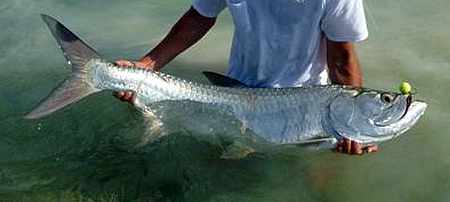 The
best bet for catching a big Tarpon is to rig live baits on a 60 to 80 lb
suffix leader and a model 7385 VMC 7/0 to 9/0 circle hook. Most of our
tarpon are in the 75 to 100 lb. range but we do get some up to 150 lb.
and over.
Mahi or Dolphin is another fish that is targeted during June offshore in our area, and so far this has been an interesting year for Dolphin in our region. The Dolphin bite has literally been changing day to day. Some days its 240"
some days its 120" and out of Port Canaveral that is literally about a 15 mile
difference.
Schools
of Dolphin have been coming in, in waves. Some days you can fish all
day and get skunked, and the next day you can quickly get your limit. Right
now your best bet for Dolphin is to troll ballyhoo near the western edge of the
Gulf Stream, but they will be moving closer into shore as we move into
the summertime period.
Blue and white or pink
and white skirts seem to be working best right now along with any light
colors, but if you get out on an overcast dark day or are running a down rigger,
tie on a purple and black or red and black skirt. Darker colors seem to work better during dark days.
Fish the weeds, rips and temperature breaks to get the best bite. The Dolphin right now are averaging around 10 pounds but we have had fish in the 20 to 40 pound range caught this spring.
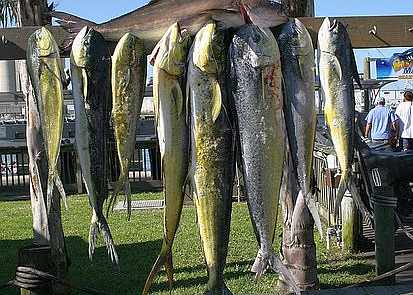 In addition to Dolphin, trolling ballyhoo on the Western
edge of the Gulf Stream this month can get you hooked up to a
salifish or a blackfin tuna. Lets hear it for sushi!
Recently, the King Mackerel have moved off of the 60 to 90 foot depths into the 15 to 50 foot clean, green water depths along with some monster Crevalle Jacks and 100 pound plus Tarpon.
The Kingfish have been averaging 15 to 25 pounds with some in the "smoker" category.
Most all of the Captains I spoke with expect June offshore fishing this year to be much better than
last year.
They recommend you fish the temperature breaks, don't pass up the rips and
weed lines in water less then 130 feet deep, work your way up ridges and always pay
attention to your bottom machine.
If it looks fishy, drop a bait on it!
_________________________ Offshore
The Grouper bite on the artificial reefs and wrecks in 120 to 150 foot depths, as well as the 180 to 250 foot depths has been pretty good this past week and is expected to get better this month.
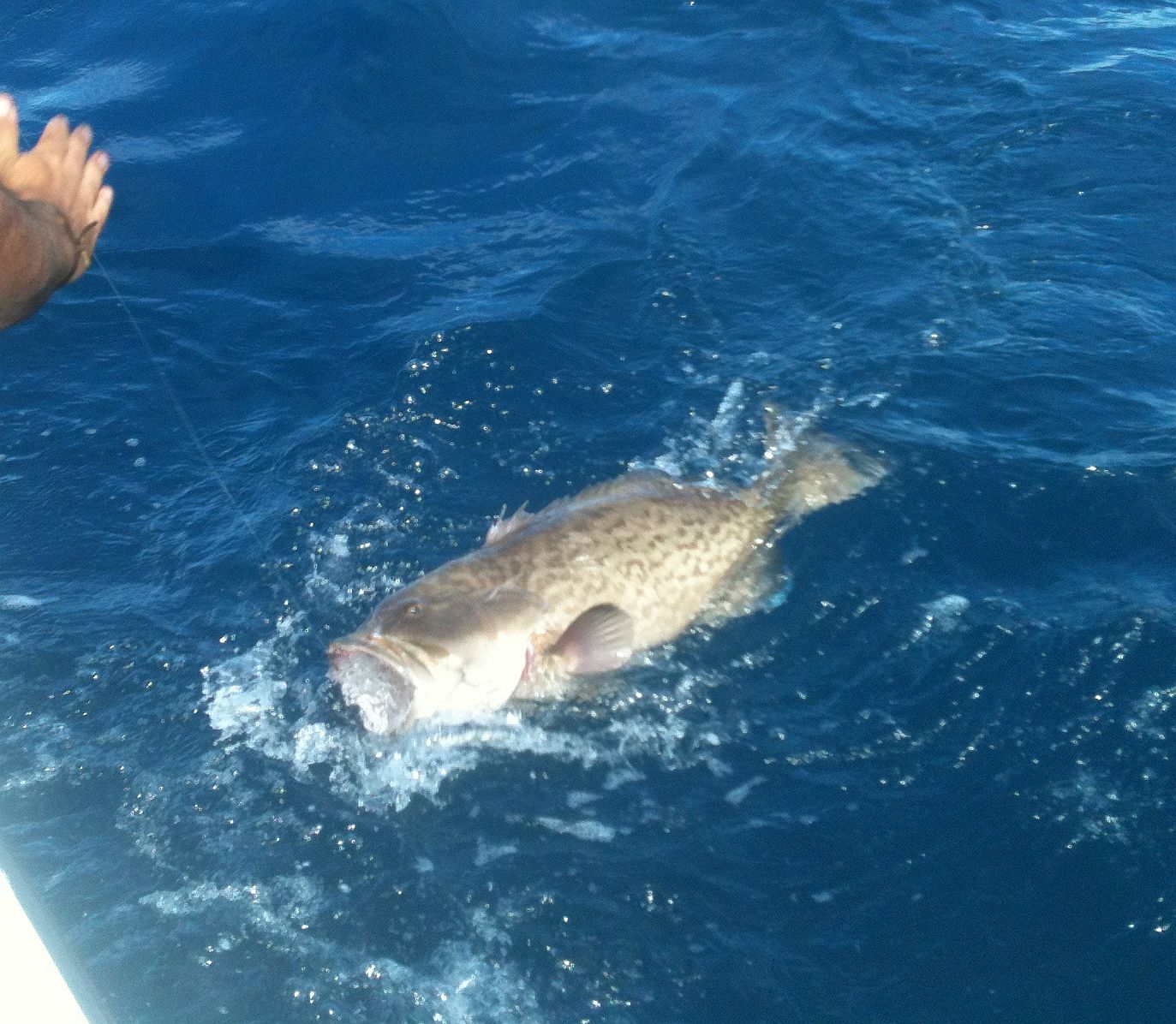 Look for baitfish stacked up over the tops of the reefs or wrecks and drop down a live pogie or pinfish. Look for baitfish stacked up over the tops of the reefs or wrecks and drop down a live pogie or pinfish. If you're a more aggressive angler and like to fish artificial baits, the Williamson Vortex speed jig is a good lure to drop, especially in deeper water.
You're going to have a better shot at catching Gag Grouper if you tie on a "glow" jig in the 180 to 250 foot depths and a chrome/black or chrome/yellow jig in the shallower depths.
The average size Gag Grouper being caught right now off of Port Canaveral is 10 to 15 pounds, with some fish running up to 30 pounds. Till Next Month, Good Fishing & Tight Lines! | ||||||||

| Link One | Link Two | Link Three | Link Four | Link Five | Unsubscribe to this newsletter |