Your May 2014 Mosquito Lagoon & Indian River Fishing Report
Published: Thu, 05/01/14
| Newsletter Issue # 57 Fishing Forecast |
May1, 2014 | |||||||
Mosquito Lagoon & Indian River Fishing | ||||||||
As of late April, the water has been clear of phytoplankton blooms in the Mosquito Lagoon and most of the Indian River. Chlorophyll levels are low and the brown tide(Aureoumbra lagunensis)so far has not been a problem for sight fishermen despite the observed accumulations of macroalgae in the northern lagoon at Kennedy Point Park and along the seagrass transects in the vicinity. This being said, we can expect some great fishing for redfish, black drum and big sea trout in both lagoons throughout the month of May. The sea trout fishing in particular has been on fire since the baitfish began showing up in the lagoons. Big gator sea trout roaming the flats are best caught by fishing very early or close to dusk around the mullet pods with topwater plugs. 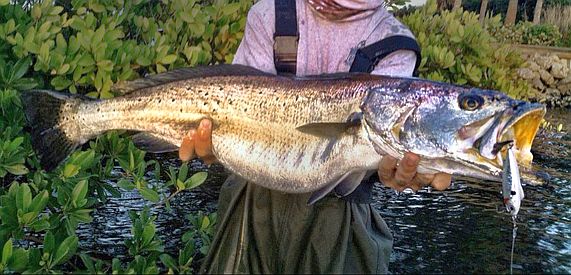 Later in the day, your best bet for catching one of these monsters or a nice redfish is with jerk baits, paddle tail baits or gold spoons. A Z-Man, Saltwater Assassin or Trigger X soft plastic bait on a 1/16th or 1/8th ounce worm hook is hard to beat when targeting the potholes. Make long casts and use light line to score bigger fish when the water is as clear as it is right now. Big redfish are cruising the shorelines and the sandy potholes of the Mosquito Lagoon this week. Cut baits on a BMC circle hook with just enough split shot to keep the bait in the pothole is all you need to pick up one of these bruisers. Sea trout from 3 to well over 5 pounds are plentiful around the shallow flats of both lagoons and slot size reds are holding in the same areas and hitting the same baits as the trout. Fish around the mullet pods and drop offs. Bait fishermen have been consistently nailing redfish in the Merritt Island National Wildlife Refuge off both sides of Peacocks Pocket road using live finger mullet, cut baits and shrimp. Trophy fish on both sides of the road can be caught if you know how to target them. Gold spoons, topwater lures and live baits are reliable producers in the "marsh" canal. This "bull" was caught with a well placed cast on a gold Johnson's Sprite right at dusk in a shallow marsh canal.  The shallow flats around Peacocks Pocket boat launch continues to be a good place to fish for sea trout, black drum and slot reds by bank fishermen, waders and kayakers. A less glamorous sport fish, Jack Crevalle are cruising all up and down the lagoon system from Viero Beach to Coco right now busting glass minnows and finger mullet around the spoil islands, the edges of the flats and the causeways.
Look for signs of fleeing baitfish as a dead giveaway to their location.
A Rapala X Rap 8 or 10, a shallow Shad Rap or any top water bait like the Chug Bug will do just fine and get you a hookup.
The average Jack is running around 4 pounds with some 8 pounders in the mix. Playalinda Beach and South
May surf fishermen can look forward to catching whiting, juvenile black drum, redfish, some late pompano, black margate, lookdowns, shark, snook, bluefish and even some flounder in the areas between Indialantic and north to the Canaveral National Seashore.
Use live or cut mullet for blues, redfish and shark and sand fleas, peeled fresh dead shrimp, or fresh (not frozen) clams for pompano and whiting. There is no need for live shrimp when surf fishing.
Fish Playalinda during the higher phase of the
tidal cycle, about 2 hours on either side of peak high tide. It's even better when the tide occurs in the early morning hours.
Normally at Playalinda, a trough or deeper slough forms just past the shore break and
then about thirty yards out from that a sandbar forms.
When the waves approach the
sandbar, they break up and then reform a bit over the trough only to break up again when reaching the shore.
When each wave breaks on the shoreline, it churns up the sand and
with it small invertebrates (primarily sand fleas) that are burrowing in the sand.
Pompano and whiting will cruise
just offshore to grab the sand fleas as they are pulled out to sea then as the tide recedes and the trough gets too
shallow for the fish, they will move out past the
sandbar where they can still be caught, but this is when the action usually comes to an abrupt halt.
Black Margate
or Sea Bream as they are often referred to are excellent table fare and
a common catch by surf fishermen during the month of May.
They average around 3 pounds but can grow to well over 10 pounds. The 15 1/2 pound world record was caught in Fort Pierce Inlet. During low tides you can spot the coquina and coral heads in the surf where crabs, shrimp and small baitfish hide. Generally when you cast just past these outcroppings you will get a hookup.
The area around Patrick is also good for catching large snook and shark. A sliding sinker rig with a small live bait hook and a live 8 -10" mullet for bait will usually get you some action.
________________________
Near Offshore Fishing
In addition to the annual spring cobia migration which is now in full swing between Sebastian and Port Canaveral, the kings, dolphin and sails are also available offshore.
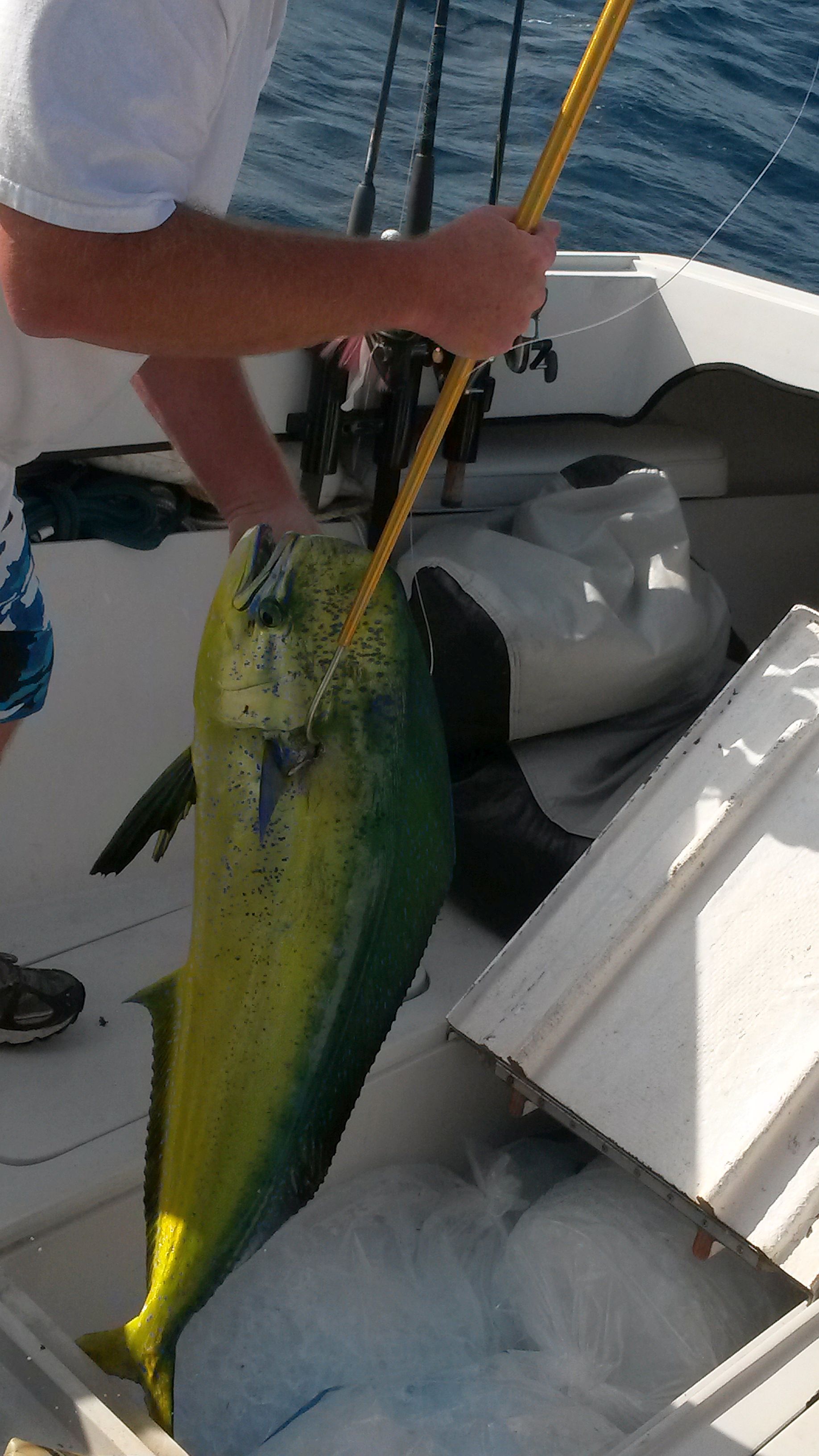 Jason Cooper sent me these pics which are from a recent trip they made out of Port Canaveral. Jason Cooper sent me these pics which are from a recent trip they made out of Port Canaveral. The fish were caught trolling around scattered weeds between the 150 and 200 feet depths.
The water temperature was 76 to 77 degrees and seas were 2 to 3 feet.
The annual Cobia migration follow the 68 to 72 degree water temperature break.
They landed a total of six dolphin up to 25 pounds and had a
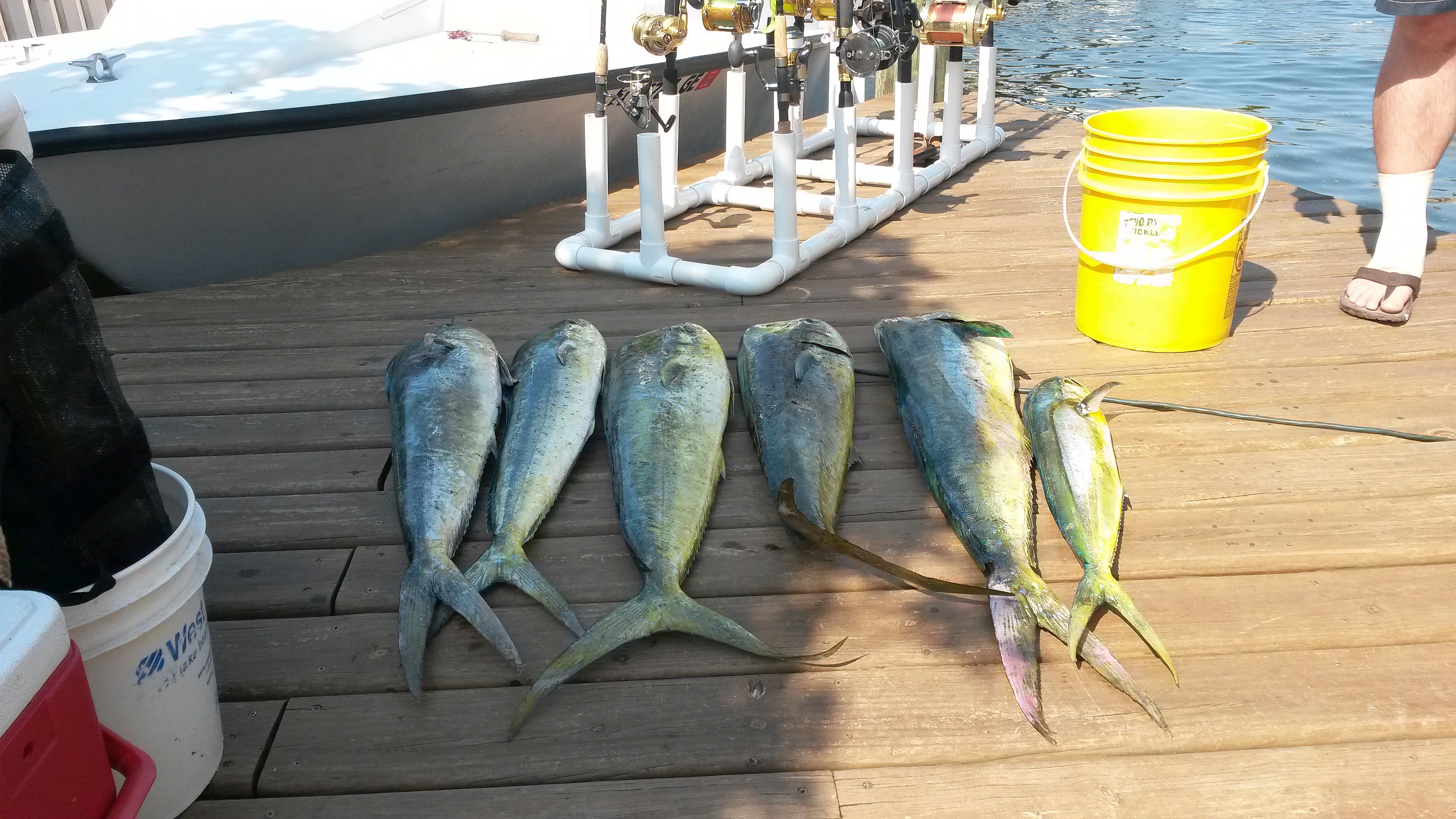 few sailfish pop up in their spreads to beat up on their lures and leave. few sailfish pop up in their spreads to beat up on their lures and leave.Skirted Ballyhoo/Islander combos in Pink and Dolphin colors were getting the most hits.
Now through June is prime time for sailfish out of Port Canaveral as they start working their way up the coast to our area in the next few weeks or months. If you're targeting sailfish, troll at 3 to 4 knots with a naked ballyhoo in 120 to 240 foot depths and you should have a shot at picking one up.
A lot of guys like to slow troll the 80 to 90 foot reefs with live baits.
Sailfish will often strike live baits with their bills to kill or stun it and then circle around to eat the bait. When you see the rod or feel a hard knock, put your reel in free spool to drop the bait back and when you feel the sail pick up the bait, engage the reel for a solid hookup.
Most of the sails being caught in this part of the State right now are in the 30 to 45 pound range.
Cobia anglers in our area do a lot of sight fishing in lieu of jigging around structure. When sight fishing Cobia, look for free swimming fish, fish around the bait pods, manta rays, or anything else that will hold fish. Once you spot a Cobia, toss a live menhaden, croaker, pinfish, shrimp or a white/chartreuse or red/white hook up jig in front of the fish if you fish lures. Our cobia are averaging about 25 pounds, but fish over 50 pounds are not uncommon. 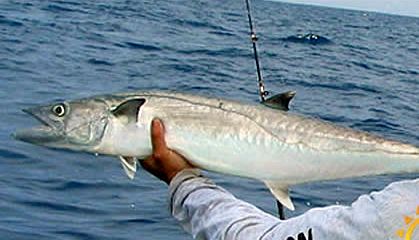 Kingfish are also being caught around the wrecks and reefs in 45 to 90 feet of water.
The 8A and Pelican Flats reefs are favorite areas for kings.
A live or slow trolled dead menhaden with a duster in front of it on a wire stinger rig with a VMC 9626 model hook should get you a hookup. Right now there is a huge variety of sharks offshore cruising up and down the surf zones looking for something to eat. Black Tips, Silkies, Sharpnose, Spinners, Lemon, Bull shark and Hammerheads are taking advantage of the dirty water conditions caused by this past weeks windy conditions.
The fish are cruising just outside the surf break out to about the 50 foot mark and can be caught using chunks of bonita, mullet, ladyfish or even chunks of barracuda on a BMC circle hook on a wire rig.
Live pogies are also a good option in the surf break between Melbourne and Coco Beach since they are the predominant bait fish in the surf right now.
The shark are averaging between 25 and 75 pounds with some bulls and hammerheads in the 200 pound plus range.
Till Next Month, Good Fishing & Tight Lines To You All! | ||||||||

| Link One | Link Two | Link Three | Link Four | Link Five | Unsubscribe to this newsletter |