Your February 2014 Mosquito Lagoon & Indian River Fishing Forecast
Published: Sat, 02/01/14
| Newsletter Issue # 54 Fishing Forecast |
February 1, 2014 | |||||||
Mosquito Lagoon & Indian River Fishing | ||||||||
osquito Lagoon & Indian River The water so far this month has been pretty clear in all 3 of our lagoons so February should be a great month for sight fishing opportunities.
The redfish have schooled up and the big sea trout are scattered around the shallow water flats soaking up the late afternoon sun.
If you can time your fishing sessions between the cold fronts and the gusts of windy arctic air, January and February are prime months for catching some really big gator sea trout in our area.
When the cold weather fronts like we had this past week send the water temperatures down past the 50s, the trout move into deeper water areas where the water temperatures are more to their liking.
Dredge holes with muddy bottoms, harbors and the deeper canals will hold a
couple of degrees of extra warmth and are points of refuge for larger
trout.
When the sun starts warming up the water, the fish will start moving out of the deep holes onto the shallower grass and mud flats to forage for shrimp and small bait fish. Smaller sea trout almost always school up and can be caught using small jigs, live shrimp or D.O.A. shrimp under popping corks, and occasionally small topwater lures like the Zara Spook Jr.
These smaller sea trout can usually be found along the transition edges of the flats where the water depths drop down to 3-6 feet.
During February, the larger solitary sea trout can be sight fished on the shallow flats around the edges of the sandy potholes in water as shallow as a foot or less. The best flats are those that are adjacent to deeper water along the drop-offs.
Gator sea trout are solitary fish, seldom school up, and are frequently found in extremely shallow water in the most unlikely areas. One of the deadliest all around baits for gator sea trout is a live croaker or grunt fished under a Cajun Thunder rig. A good second choice is a large live shrimp free lined or fished under a float.
On warmer days, topwater lures, DOA CAL jerkbaits, and gold spoons fished very slowly will also produce.
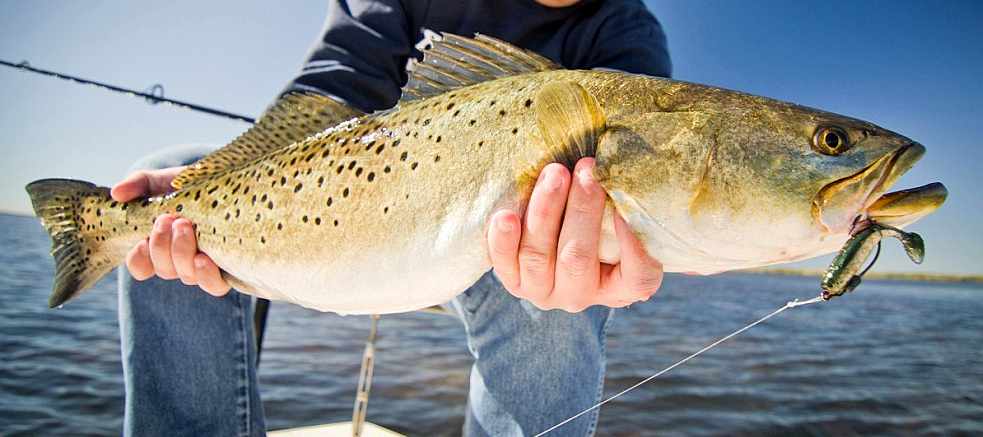 The water in the central and lower end of the Mosquito Lagoon is gin clear right now, which makes the fish spooky. However, if you can find a day where the winds are not howling, these fish should be easy to find if you know where to look. Don't burn up the flats trying to locate them, use your push pole.
Stealth fishing practices, long casts with light lines and slow retrieves will increase your chances of landing one of these beauties and on warmer days, wading is a great way to get close to large fish without spooking them.
Regardless of how you go after them, I do NOT
recommend burning up the flats to do so. The push pole is your best friend!
Banana River The thousand islands area deep water canals in the Banana River should be a great area to target gator sea trout during February.
Fishing with a jumbo shrimp on a #1 or #2 wire hook beneath a small float during the first couple of hours of daylight can be a deadly method for catching gator sea trout in this area.
Allow the shrimp to run under the docks or to the edge of cover for a more natural presentation.
Tie the hook directly to your line. Don't use swivels, leaders or any other unnecessary terminal tackle. To fool the biggest fish, the shrimp must act totally natural.
___________________________ Sebastian Inlet 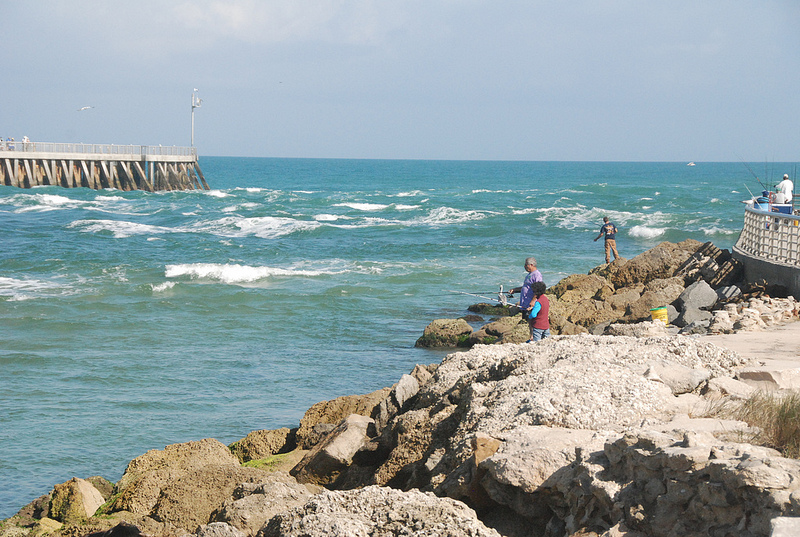 The recreational Atlantic coast snook fishing season in Florida starts on Saturday, February 1st, and will last through the end of May. Sportsmen can fish for snook off the Atlantic coast, Lake Okeechobee and the Kissimmee River. The Florida Fish and Wildlife Conservation Commission allows anglers to keep one snook per day that measures 28 inches to 32 inches in length. The February 1st. snook season opening will have crowds of fishermen lining the 750 foot north jetty of Sebastian Inlet and other locations along the Atlantic.At Sebastian, the outgoing tides pull shrimp, crabs and a variety of bait fish from the Indian River though the inlet, followed by a clean ocean water flush of the inlet that occurs during the incoming tides.
Bank fishermen looking for snook fish from the inlet side, primarily during the evening hours, using an assortment of bucktails, grubs, flair jigs and large diving plugs.
At night, boaters power drift the Inlet using primarily live baits for snook.
When the snook bite turns on during the daytime periods, fishermen use live mullet, croakers, pigfish, jumbo shrimp or other natural baits with a great deal of success.
Watch the tides to see what baits are in the Inlet and "match the hatch" to get the best results.
Sebastian Inlet is loaded with lead and artificial lures on the rocky bottom so use just enough lead or split shot to drift your bait naturally just off the rocky bottom.
You will probabloyl lose a lot of terminal tackle on the rocky bottom until you get the hang of it but but that's what fishing is all about.
If you bring your boat, anchor just off the tip of the north jetty and try fishing with fresh cut or live baits off the bottom.
Everything from snook, redfish, black drum, Spanish mackerel, snapper, sheepshead, shark, bluefish and possibly even a late season tarpon can be caught in the Inlet during February, so hang on to your rod.
If you're interested in fishing the inlet, go to www.sebastianinletdistrict.com for current fishing reports and a look at the live web cam.
The Inlet park is about 15 miles south of Melbourne Beach on State Road A1A.
___________________________ Playalinda Beach
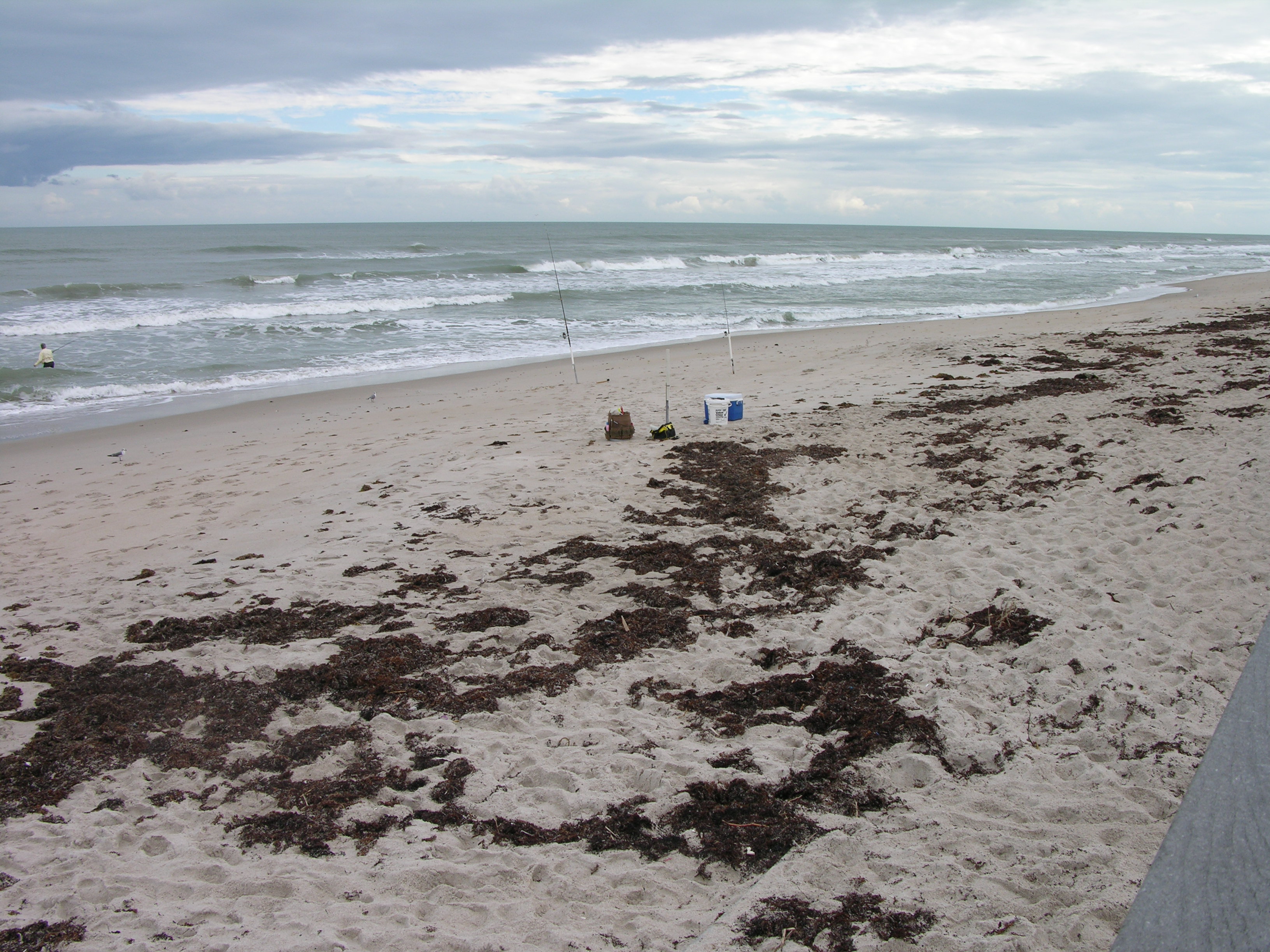 Playalinda Beach surf fishermen have been experiencing a stellar year with good catches of whiting, pompano, bluefish, Spanish mackerel and black drum in the surf. Playalinda Beach surf fishermen have been experiencing a stellar year with good catches of whiting, pompano, bluefish, Spanish mackerel and black drum in the surf. The colder weather has improved surf fishing, especially for pompano.
Sand fleas, clams and small pieces of fresh peeled shrimp are the baits of choice for pompano and whiting.
For blues, Spanish mackerel, redfish and an occasional shark, use live or cut mullet. Parking Lots #4 thru #9 seem to be the most productive spots to fish during the early morning hours on the last couple of hours of an incoming tide. ____________________________
St. Johns River System
Fishing reports from the St. Johns River system indicate that a healthy population of American Shad are now present in "Shad Alley".
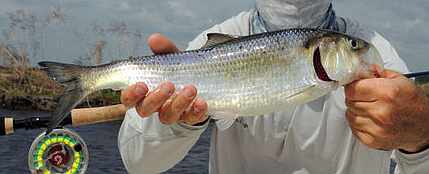 This portion of the river that runs from the east end of Lake Monroe, to the south end of Puzzle Lake is one of the most well known places for anglers to sample this once a year fishing opportunity.
Other well known hotspots for American shad are the "S" curves around Mullet Lake, the Jolly Gator sand bars just south of SR 46 east of Geneva, the Marina Isle area, the mouth of the Little Econ and the St. Johns river west of Hatbill Lake Park.
Fly tackle with colorful weighted patterns and spinning tackle with light lines and a variety of colorful jigs, "shad darts", and small spoons are what most anglers use to catch these tasty fish.
American Shad are hard fighting fish and will often put on a nice aerial display when hooked.
Although they can show up in the river anytime from December through mid March, this February should be a good month to fish for these fiesty fish.
Most of the shad being caught right now are in the 3 to 4 pound category, however fish up to 6 pounds are not uncommon.
Until next time,
Tight Lines To All!
| ||||||||

| Link One | Link Two | Link Three | Link Four | Link Five | Unsubscribe to this newsletter |