Your January 2014 Mosquito Lagoon & Indian River Fishing Forecast
Published: Wed, 01/01/14
Newsletter Issue #53 Fishing Forecast January 1, 2014
| Mosquito Lagoon and Indian River Fishing |
Mosquito Lagoon:
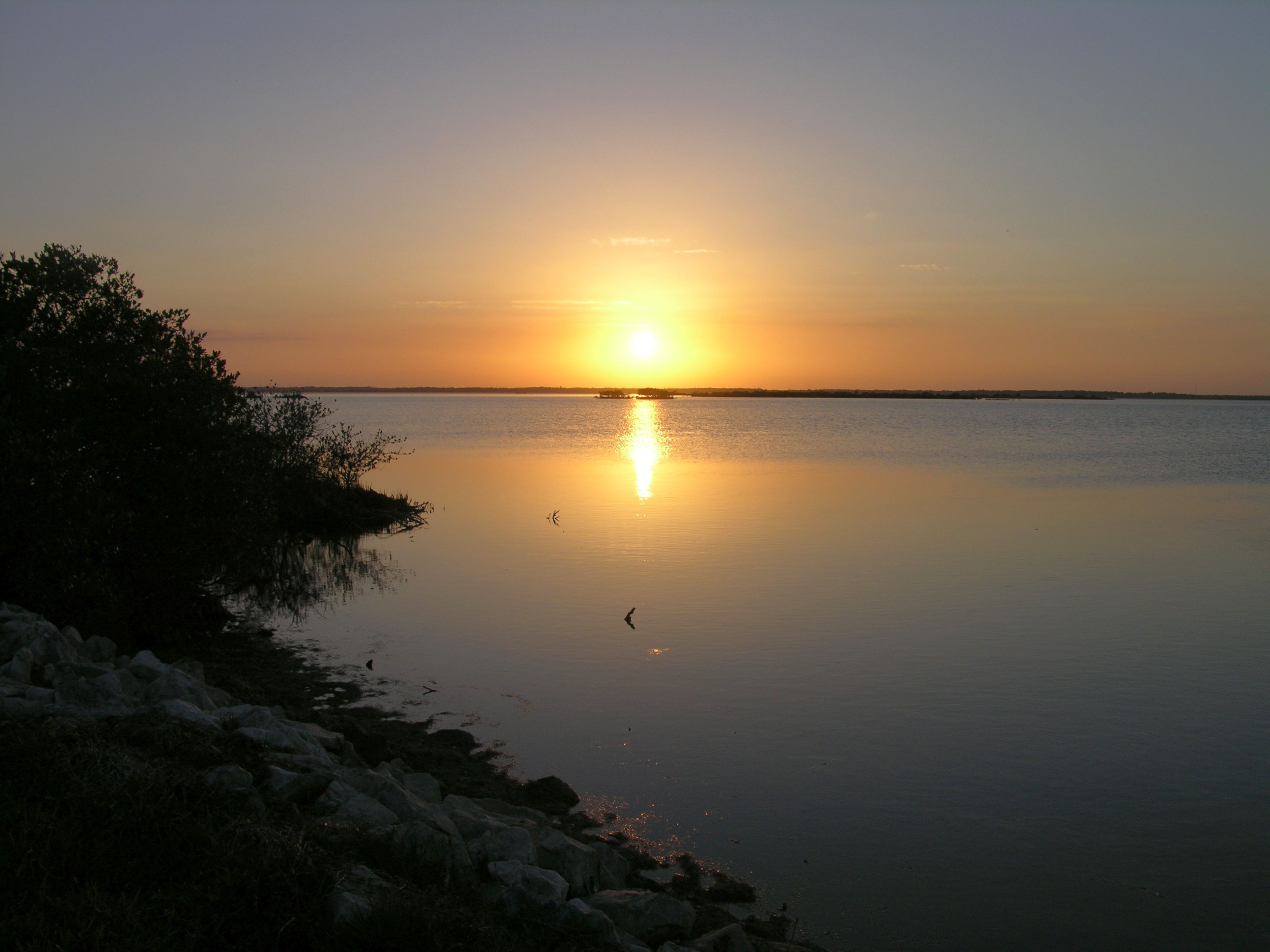
Water levels in the Mosquito Lagoon are still dropping and in most areas the water is beginning to clear up. This is setting the stage for some quality sight fishing this January.
The high pressure system we had a couple of weeks ago has moved off to the east in the Atlantic, and forecasters who called for 80 degree temperatures on Christmas day were almost right on. The weather has been great for fishing in East Central Florida.
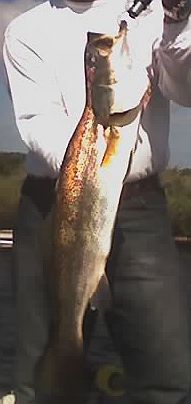
Although the past couple of weeks have been tough fishing, redfish up to 25 pounds are still being caught in good numbers in the deeper water flats.
As long as the water temperatures remain in the 70s, the redfish and spotted sea trout will be holding in the skinny water flats.
On cooler days, fish in protected areas and sunny spots. Look for fish to be holding in the sandy potholes until the sun gets over your head.
Some nice spotted sea trout are being caught on the flats where the adjacent water levels drop to 3-6 foot or more
Small jigs, live shrimp on popping corks and small topwater lures like the Zara Spook Jr. are the baits of choice.
When the water temperatures get comfortable, larger sea trout are being caught on the skinnier flats.
Contrary to popular belief, sea trout fishing in December and January is good for large fish if you know where they are holding.
The
cold fronts of December will normally concentrate the fish into the deeper holes
where they become easier to locate and target. Slow
presentations
and lighter lines are the norm for winter fishing conditions.
This is also the time of the year to target tailing black drum in the Banana River Lagoon's No Motor Zone. Fish for them with live shrimp and crabs, or with artificial shrimp and crab imitations.
For fly fishermen, a well placed black Clouser will hook you up with either a black drum, a redfish or a sea trout. All three species will eat this fly.
For those who have never seen black drum tailing, it is well worth the paddle into the No Motor Zone.
Indian River:
December and January are generally the best "catching" months of the year in the Indian River Lagoon, producing the most numbers of fish caught per day.
The local guides generally average anywhere from 10-40 fish per day, and during the hard cold snaps days of 50 plus fish are not uncommon.
The passing cold fronts push the fish into predictable areas, and as the water levels continue to drop, the fish are concentrated even further.
As in the Mosquito Lagoon, the main targets this time of year are redfish, speckled sea trout, black drum and snook.
 Although
sight fishing is getting better in much of the Mosquito Lagoon
and the backwater creeks around the Ponce Inlet
area, the
water is still a bit dirtier in the North Indian River Lagoon around
Titusville, Mims and Scottsmoor. However, those areas should
start
to clean up over the next month or so.
Although
sight fishing is getting better in much of the Mosquito Lagoon
and the backwater creeks around the Ponce Inlet
area, the
water is still a bit dirtier in the North Indian River Lagoon around
Titusville, Mims and Scottsmoor. However, those areas should
start
to clean up over the next month or so.
From now through the spring, it doesn't get much better for catching trophy size Speckled Sea Trout in the 8 to 10 plus pound range.
The big gator trout are moving from the deeper edges up onto the shallow flats and setting in the potholes of both Lagoons.
This is also the time of the year to target tailing black drum in the Banana River Lagoon's No Motor Zone. Fish for them with live shrimp and crabs, or with artificial shrimp and crab imitations.
For fly fishermen, a well placed black Clouser will hook you up with either a black drum, a redfish or a sea trout. All three species will eat this fly.
For those who have never seen black drum tailing, it is well worth the paddle into the No Motor Zone.
Indian River:
December and January are generally the best "catching" months of the year in the Indian River Lagoon, producing the most numbers of fish caught per day.
The local guides generally average anywhere from 10-40 fish per day, and during the hard cold snaps days of 50 plus fish are not uncommon.
The passing cold fronts push the fish into predictable areas, and as the water levels continue to drop, the fish are concentrated even further.
As in the Mosquito Lagoon, the main targets this time of year are redfish, speckled sea trout, black drum and snook.
Although
sight fishing is getting better in much of the Mosquito Lagoon
and the backwater creeks around the Ponce Inlet
area, the
water is still a bit dirtier in the North Indian River Lagoon around
Titusville, Mims and Scottsmoor. However, those areas should
start
to clean up over the next month or so. From now through the spring, it doesn't get much better for catching trophy size Speckled Sea Trout in the 8 to 10 plus pound range.
The big gator trout are moving from the deeper edges up onto the shallow flats and setting in the potholes of both Lagoons.
A live free lined finger
mullet
is your best bet to score one of these bruisers.
You can also catch them on small soft plastic jerkbaits, suspended plugs and larger swimbaits, but live baits this time of year is the most productive.
You can also catch them on small soft plastic jerkbaits, suspended plugs and larger swimbaits, but live baits this time of year is the most productive.
Playalinda Beach Surf Fishing:
So far this winter the surf fishermen have been reporting the best surf fishing in a few years at Playalinda Beach and the surrounding areas.
Surf fishermen for the past few weeks have been reporting limits of nice pompano, decent size whiting and bluefish along with a few Spanish mackerel and redfish thrown in for good measure.
Most of the better catches were made by surf fishermen using fresh shrimp and clams for bait during the early morning hours, from dawn till mid-morning.
The Canaveral National Seashore to lot #5 seems to be where most of the action is.
A series of deep troughs parallel the beach from lots #10 south and pitching your baits into the troughs usually yields good results.
The best fishing at Playalinda seems to be during the higher phase of the tide cycle. About 2 hours on either side of a peak high tide.
When the tide occurs in the early morning hours as it has during the last couple of weeks of 2013, the surf and tides are perfect for the dawn bite.
At Playalinda, a trough or deeper area typically forms just past the shore break. About thirty
 yards past this point a sandbar forms.
 As the waves approach the first sandbar, they break and reform over the trough to break again at the shore. The shore waves stir up the sand along with sandfleas and other invertebrates that burrow in the sand.
Whiting and pompano will cruise just offshore in the trough where they can easily grap a meal and as the tide recedes and the trough gets too shallow, the fish will move out past the sandbar into deeper water.
The fish can still be caught but this is when the bite dies down quite a bit.
The beaches at Playalinda stay relatively uninhabited during weekdays which makes it a prime target for surf anglers.
As the weather continues to cool down, the pompano fishing should get even better than it has been.
Freshwater:
If you like freshwater fishing and you live in East Central Florida, you probably have already marked January 16th on your 2014 calendar.
Unless we have an unusually frigid cold front, this date is the kick off for the 2014 crappie season when the first full moon of the year finds the big females schooling in deeper waters just outside of the grass beds and the smaller males are busy fanning out their beds.
When water temperatures reach 60 to 65 degrees, the full moon periods through March are peak times to fish for these tasty panfish.
The smaller male crappie start to move into the grassy zones when water temperatures reach the 60 to 65 degree range.
The females will start to move into the beds when temperatures reach 64 to 65 degrees and when these temperatures occur during a full moon period, you can expect a major crappie spawn
Almost any lake in East Central Florida with a decent population of black Crappie will get you a
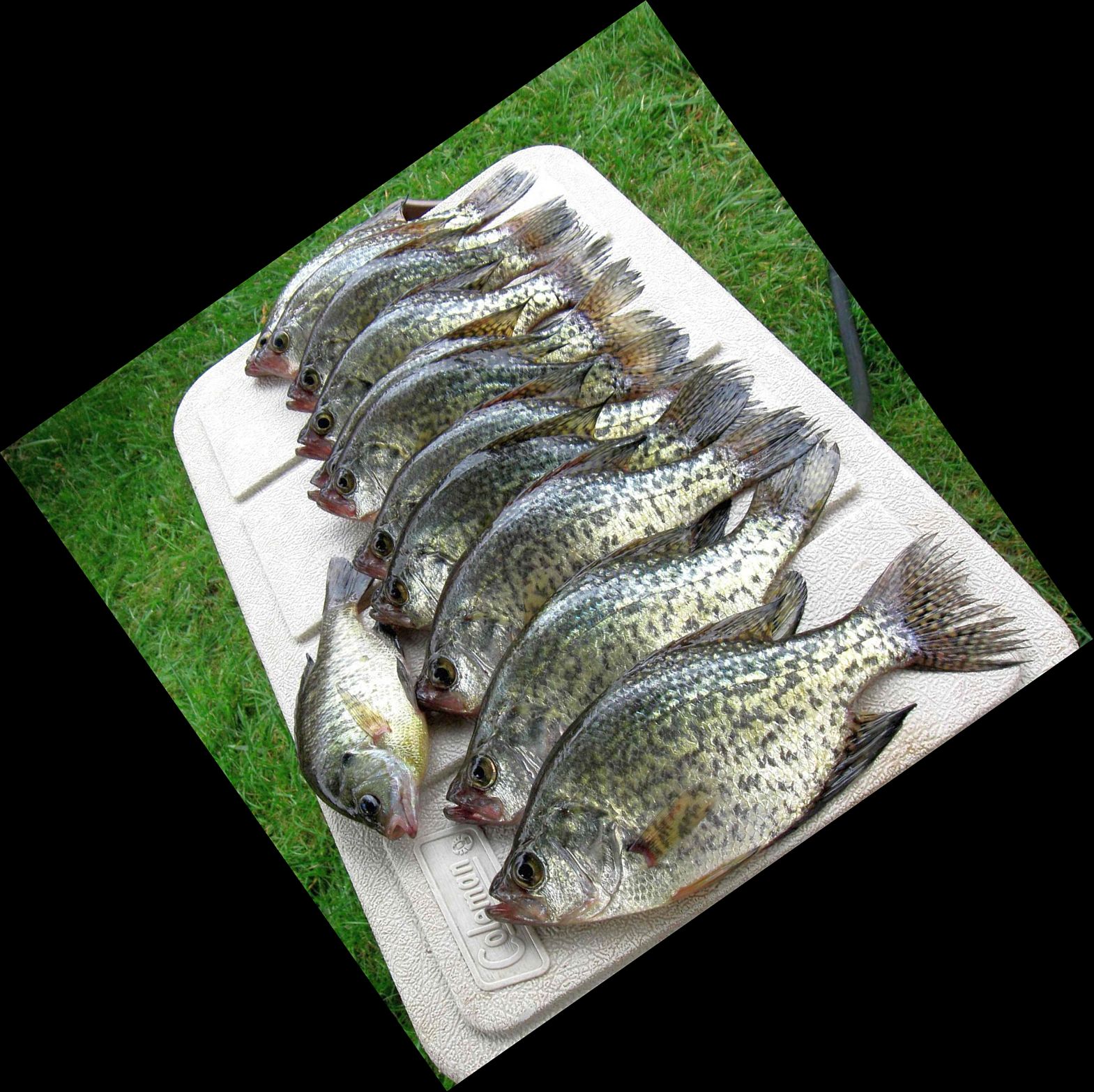 25 fish limit, but Lake Harney on the St. John's River north of State
Road 46 is one of the best in our area for producing the larger
females.
25 fish limit, but Lake Harney on the St. John's River north of State
Road 46 is one of the best in our area for producing the larger
females. Right now the better "speck" fishing on the St. Johns seems to be coming from the section north of Puzzle Lake and in the upper stretches of the St Johns south of Lake Harney.
Any of the major St. Johns River lakes will be good fishing starting this month including Lake Poinsett, Lake Monoroe, Lake Washington, Big and Little lakes George and Crescent Lake.
The Harris Chain in particular is famous for "specks" or "speckeled perch".
Crappie
are easy to catch once you locate them . Slow trolling with small curly
tail grubs with a 1/8th or 1/4 oz. jighead close to the
bottom is
a good way to find them and if they are in the grass, you can drop a
small jig or minnow directly on top of them.
Major hangouts for black crappie are the hyacinth mats found around the edges of lakes and canals.
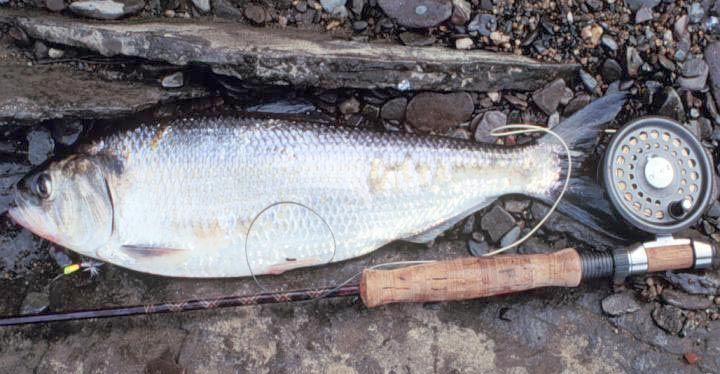
If American shad arrive in numbers on the St. Johns River this season, January can be a peak month . Unfortunately the shad runs have become difficult to predict.
 One year they are abundant and the next
they are scattered and hard to locate.
One year they are abundant and the next
they are scattered and hard to locate.
Major hangouts for black crappie are the hyacinth mats found around the edges of lakes and canals.
If American shad arrive in numbers on the St. Johns River this season, January can be a peak month . Unfortunately the shad runs have become difficult to predict.
One year they are abundant and the next
they are scattered and hard to locate. Right now American shad are just
beginning to show up on the St Johns River.
Try hitting the
St.
Johns River between Lake Monroe and Lake Harney with a 7 foot ultra light spinning rod rigged with a tandem small silver spoon/shad dart rig fished close to the bottom.
As of this posting a few shad are being caught, but not in the numbers
we expect.
Historically the hotspots for American shad are Marina Isle, the "S" curves around Mullet Lake, the Jolly Gator sand bars just south of SR 46 east of Geneva, the mouth of the Little Econ and the St. Johns river west of Hatbill Lake Park.
Here are several other areas to check out:
- From Lake Harney south past SR 46 to Puzzle Lake
- Between old Marina Isle and Lemon Bluff, including Mullet Lake
- The river north and south of SR 50
- From Puzzle Lake to Hatbill Park
- The St. Johns River between Lake Monroe and Lake Harney
Most of the shad are in the 3 pound category, but they can run up to 6 pounds.