Your November 2013 Mosquito Lagoon & Indian River Fishing Report
Published: Fri, 11/01/13
| Newsletter Issue # 51 Fishing Forecast |
November 1, 2013 | |
Mosquito Lagoon & Indian River Fishing | ||
Mosquito Lagoon & Indian River
Lagoon Fishing
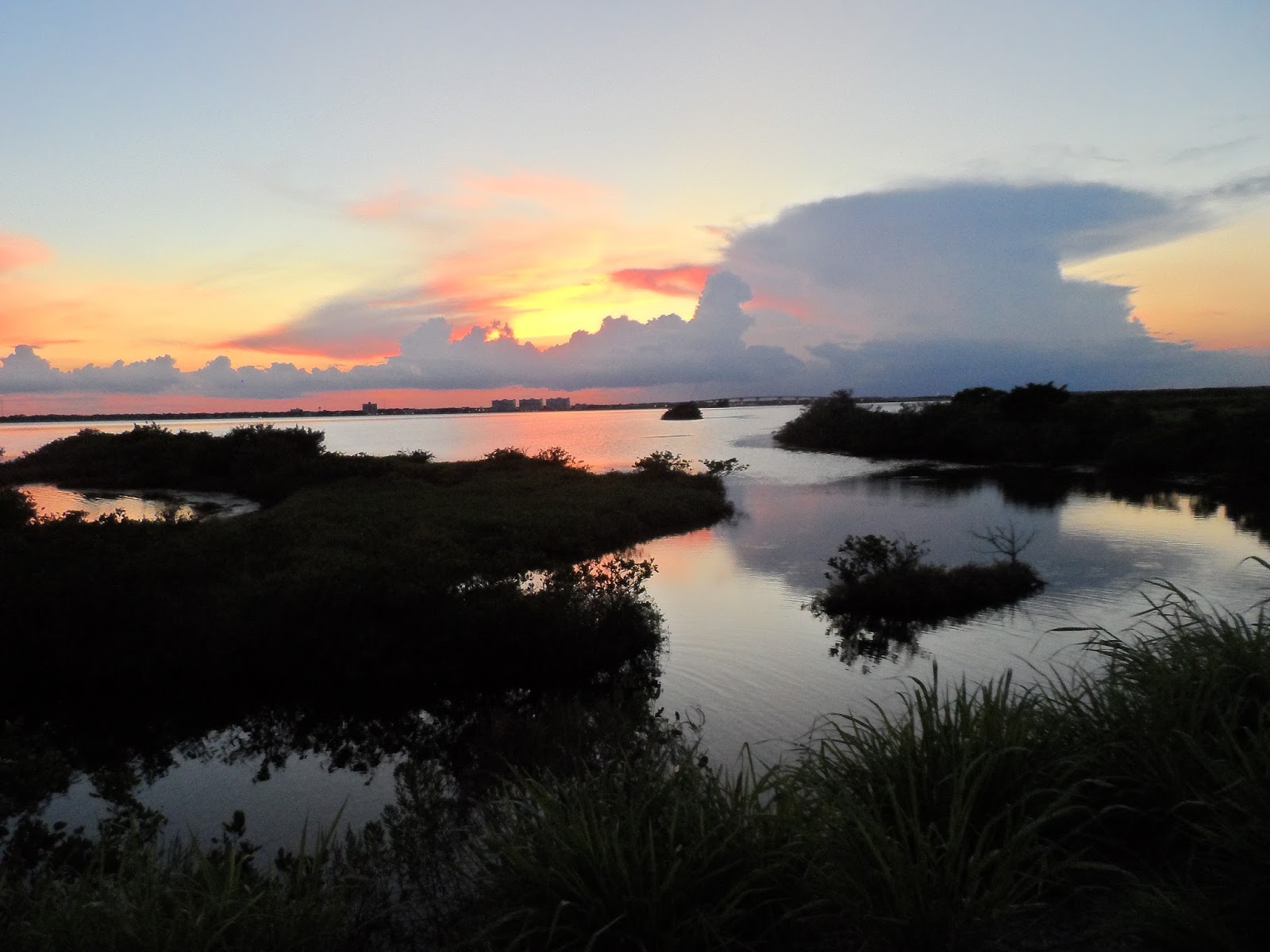
Another Halloween has come and gone and fall fishing conditions are right around the corner. The marsh areas in the Merritt Island National Wildlife Refuge along Peacocks Pocket road and the shallows of the Indian River is where where you can target tailing redfish and big sea trout in water that is often less than a foot deep.
It might benefit you the next time you drive through Peacocks Pocket road to watch the marsh canal for swirls along the banks, scattering baitfish or movement in the submerged grass.
A careful cast to these areas could hook you up with a nice red or sea trout.
November also brings us water temperatures that redfish and other predatory species prefer. As the populations of baitfish migrate off the shallows, predators are forced to switch diets to what remains.
Now shrimp, clams, various types of crab and other shallow water crustaceans become the prey of choice.
Fortunately, the shrimping season in Central Florida begins to peak as the baitfish leave the lagoons.
This makes shrimp the primary diet and bait of choice for late fall and winter fishing.
If you don't fish with live or fresh dead shrimp this November, keep at least one rod on hand with a DOA artificial shrimp or an Exude Cajun crab to pitch to likely targets.  Playalinda Beach surf fishing usually picks up in November for pompano and with over 70 miles of coastline in Brevard County, you can expect to see a lot of surf fishermen on the beaches. Playalinda Beach surf fishing usually picks up in November for pompano and with over 70 miles of coastline in Brevard County, you can expect to see a lot of surf fishermen on the beaches.The fall baitfish migration has started and there are literally millions of mullet in the surf up and down our beaches.
The fish have moved into their winter feeding patterns and surf fishermen will be targeting bluefish, Spanish mackerel, whiting, sheepshead, pompano and drum during November. Clams and shrimp will catch just about anything in the surf, but for pompano, mole crabs (a.k.a. sand fleas), bits of clam and small pieces of shrimp work best.
For bluefish, live or chunked finger mullet on a 5/0 hook crimped to a short length of wire leader or 50# plus mono works wonders.
Anglers targeting Spanish Mackerel and small bluefish using small diamond jigs or Gotchas will do well in the surf, especially around the glass minnow pods.
Larger spoons on a short single strand of light leader wire or a piece of 50 pound fluorocarbon is just the ticket to catching the larger bluefish and big jacks.
Tides and weather always play an important part in planning a fishing trip.
I personally prefer fishing during a raising tide with a light wind, which is why I try to fish as early in the day as possible. The beaches from Melbourne Beach south to Sebastian Inlet and the higher numbered parking spots along the Canaveral National Seashore at Playalinda Beach have deeper troughs which usually harbor pompano.
These areas are usually where the most savvy surf fishermen choose to place their sand spikes. Offshore, Inlets, and Near Shore
Last month the windy conditions caused rough seas and "muddy" water out to 240 feet which made for lousy fishing.
Mullet in the millions are swimming up and down the beaches of East Central Florida and should continue to do so throughout the month.
Tarpon, sharks, big redfish, jacks, snook and mackerel are following and mixed in with the schools feeding away on the mullet.
A mullet hooked through the bottom and top lips with an 8/0 circle hook tied to about 6 feet of fluorocarbon will get you a hookup in relatively short order.
If you want to speed up the process, fish a live pogie in a school of mullet. The different bait seems to attract strikes much faster.
Just north of Cape Canaveral towards the false Cape there are now huge schools of jacks, bluefish, Spanish mackerel and ladyfish gorging on acres of glass minnows.
A small bucktail jig or diamond jig tied to a short length of wire leader tossed into the melee will get you a hookup in short order if you reel like crazy.
When the water temperature in the surf hits the magic 68 degree mark, flounder fishing will start to noticably improve.
When the 68 degree temperature mark is reached, flounder are prompted to move into the inlets for their annual spawning migration out into the ocean. Small 1 to 3 pound gulf flounder will start to appear first, followed by the doormat sized 3 to 12  pound southern flounder. pound southern flounder.Live finger mullet, mud minnows or a jumbo live shrimp fished on the bottom is the preferred method for catching these tasty fish.
If you prefer to fish artificial baits, drift on the lagoon side of the passes with a DOA CAL bait, 3" paddletail bait or a 1/4 oz. bucktail jig fished right on the bottom. Pompano will also frequently school on the lagoon side of the passes before moving out to the beaches to feed on sand fleas and other crustaceans when the water temperatures start to cool down. _____________________
Till next time,
Tight Lines To You All! | ||
 Pinfish, mullet, mud minnows, pigfish and juvenile fry of other species were their primary forage.
 | Link One | Link Two | Link Three | Link Four | Link Five | Unsubscribe to this newsletter |