Your October 2013 Mosquito Lagoon & Indian River Fishing Report
Published: Tue, 10/01/13
| Newsletter Issue # 50 Fishing Forecast |
October 1, 2013 | |||||||
Mosquito Lagoon & Indian River Fishing | ||||||||
Late September and October is when big brooder "bull" redfish start schooling in the Mosquito Lagoon, Bananna River and upper reaches of the Indian River north of Titusville. Right now is the best time of the year to hook up with a trophy redfish in the 30 to 40 pound category. Most of the spawning reds start at about 18 pounds and right now there are schools of hundreds of fish in the area that size and larger, blowing up on mullet and pogie pods throughout all of the east central Florida region. Bait fishermen are using live mullet as the first choice, cut ladyfish or mullet as a second choice and jumbo live shimp as an "ace in the hole", as one guide told me. If you like fishing with artificial baits; Rapala X-Walk 13s, the big "Rapala Glidin' Rap Right now in the northern part of the Indian River Lagoon east of Scotsmoor, most of the fish are scattered in the 5 to 6 foot depths, which makes them harder to detect. If you take your time and watch carefully, you can spot the big schools and large singles as they "push" water in front of them while foraging. It's much easier spotting them in shallower waters.  If you strike out too often, you might consider hiring a local guide for a half day of fishing.
Most of these guys know their stuff and are tuned in to the areas where the larger schools are feeding on a daily basis.
Larger sea trout are also hitting well in our region and will continue to please anglers throughout the month. Like the reds, the bigger fish are following the bait pods and picking off stragglers. Nothing beats free lining a live mullet during this time of the year but I find that topwater baits early in the morning, during overcast days and later on towards the evening often work just as good.  Jason Cooper, a fellow angler (above) fishes live bait on a regular basis and is living proof that free lining live finger mullet is extremely productive for big sea trout and redfish.
_______________________
Surf Fishing, Inshore and Near Offshore:
October is the month were almost every near shore species of fish that calls the Atlantic Ocean home can be caught within 5 miles of our local Cape Canaveral beaches. The reason for this is the annual mullet migration (Fall Mullet Run) that is occurring right now along our coast. 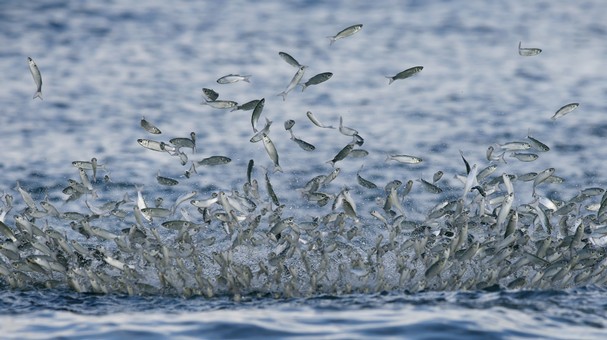 Mullet range in size from 5" to 13" which makes them the primary diet for a wide range of predators. Bluefish, Snook, flounder, mangrove snapper, cobia, tarpon and shark all come to feast on the mullet schools that are usually within 100 yards of our area beaches. The high concentration of baitfish so close to shore allows boaters and surf fishermen an opportunity to sample some great fishing. You can count on something to be feeding almost any time and at every stage of the tide. Most savvy fishermen will be using live baits appropriate to the size of fish they are targeting, rigged on VMC Circle Offset Hooks Anglers like myself who enjoy using artificial baits will be tossing anything from a simple bucktail hair jig, to a size 10 or 12 Rapala X-Rap, a Luhr Jensen Krocodile Spoon Natural hair jigs work better on snook, flounder, tarpon and redfish but when you target toothy fish like bluefish, Spanish mackerel or bonito, you might consider using the more durable synthetic tailed jigs. I personally like fishing silver spoons in the surf because I can cover more water. Surf, pier and jetty fishermen are now being treated to a nice run of Spanish mackerel along the beaches. 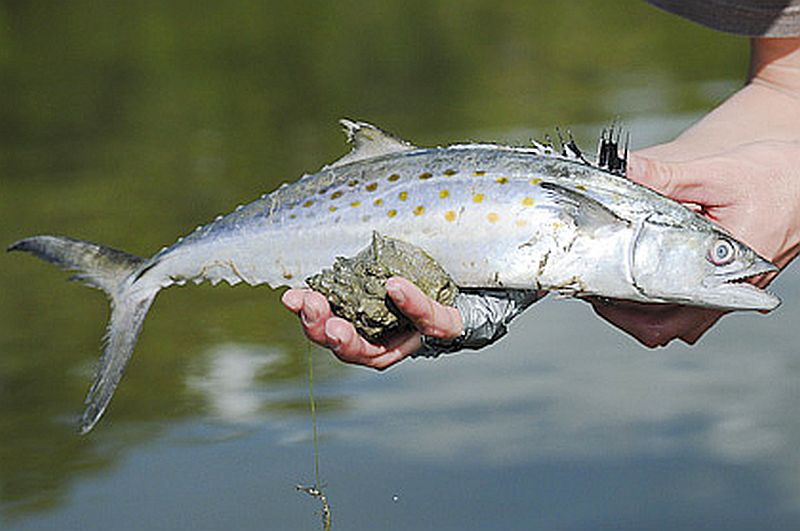 Small Krocodile spoons, "gotcha" lures, hookup jigs or any small fast moving lure will work well to catch these tasty fish. Like ladyfish, Spanish mackerel respond to a super fast retrieve. If you remember this when fishing, your hookup ratio will dramatically increase. The Spanish mackerel that are being caught right now are running from 1 to 4 pounds. King mackerel, tripletail and snook are three other species that bear mentioning this month. Right now, King mackerel can be found near offshore and on the farther offshore party grounds. Free lining a live mullet, pogie or Sea Witch strip combo behind a planer should get you a hookup. A live mullet rigged on a wire stinger rig is hard to beat during this time of the year. 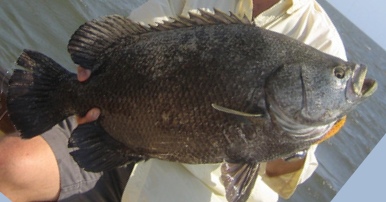 A live finger mullet on a hookup jig head is a deadly combo for tripletail that will be holding around the marker buoys, weed lines and other floating debris just offshore. A live finger mullet on a hookup jig head is a deadly combo for tripletail that will be holding around the marker buoys, weed lines and other floating debris just offshore.Live finger mullet on a sliding sinker rig, large diving plugs or large hair jigs can get you a hookup with one of those snook that can be found roaming our beaches and area inlets this month. If you like shark fishing, you will love fishing the near and offshore waters off of east Central Florida this month. Duskys, spinner sharks, bonnet heads, blacktips and just about any other kind of shark that eats mullet are now feeding along the beaches. If there are mullet in the area, you will have an excellent chance of hooking into one of these species. You will need to use either a single or multi strand wire leader that tests above 100 pounds, along with a big vmc circle hook to prevent cut offs. Some of the best places to target right now are the jetties at Ponce Inlet, Sebastian Inlet and the tip of the cape at Cape Canaveral. The sharks that are being caught right now in our area are averaging 30 to 75 pounds. Far Offshore Fishing:
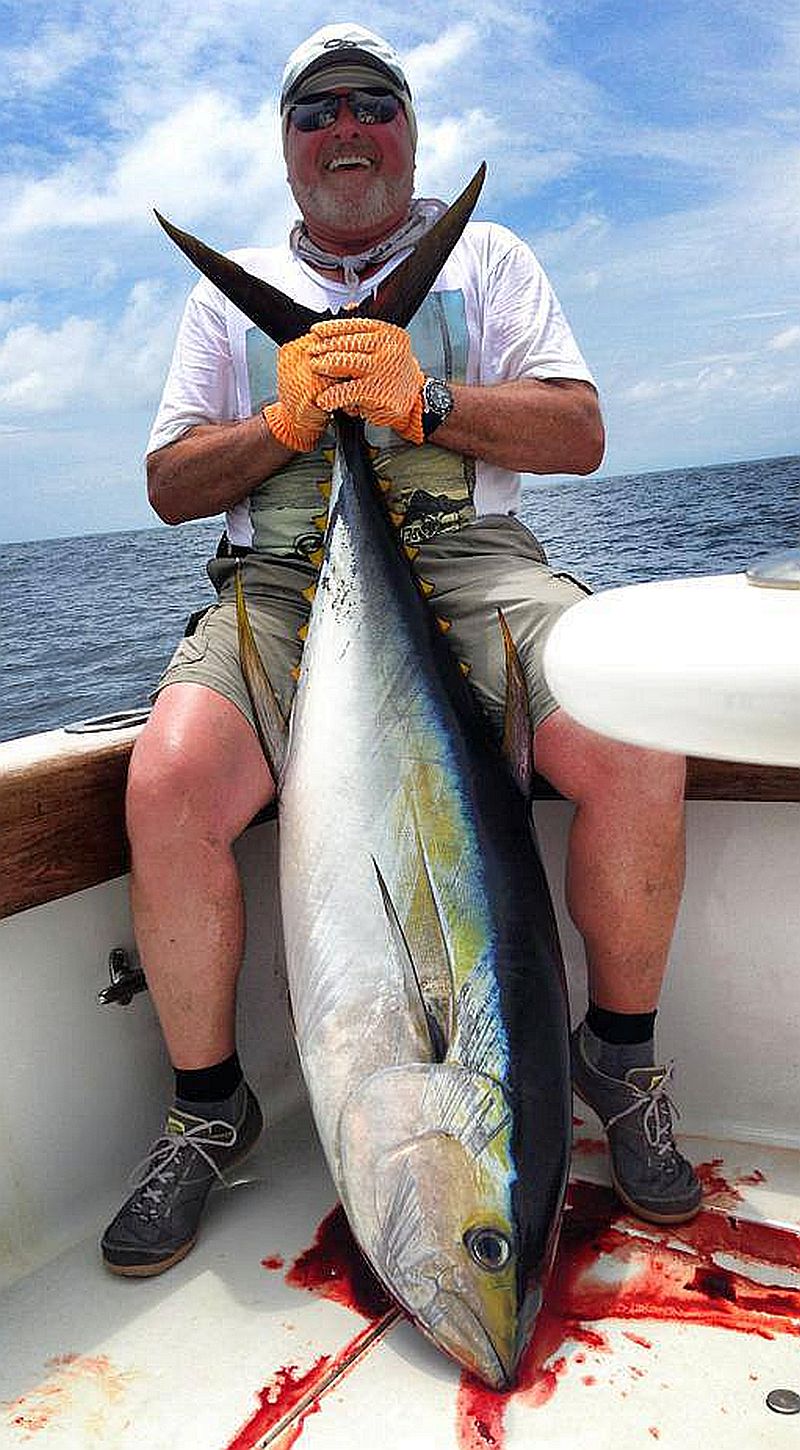 This is the time of the year when the other side of the Gulfstream is the place to be for yellowfin tuna. This is the time of the year when the other side of the Gulfstream is the place to be for yellowfin tuna.Big yellowfin tuna can be found anywhere offshore between the 85 and 105 mile mark, which is well out into the Gulfstream.
Large "bite me" lures trolled at around 10 to 14 knots, or the Williamson "coyote" trolled slower at around 7 to 10 knots work well on these fish and will reportedly get you the most bites. Captains generally find the schools by first locating the birds that are feeding on baitfish schools that the big tuna target. The average yellowfin tuna right now runs around 40 pounds, but there are plenty of fish in the 60 pound plus category out there that can make the long run worthwhile. Wish I had a boat that could get out there, I love fresh sushi!
Till Next Month, Good Fishing & Tight Lines To You All! | ||||||||

| Link One | Link Two | Link Three | Link Four | Link Five | Unsubscribe to this newsletter |