Your September 2010 Mosquito Lagoon & Indian River Fishing Report
Published: Fri, 10/01/10
| Newsletter Issue #14 Fishing Forecast |
October 1, 2010 | |||||||
Mosquito Lagoon & Indian River Fishing | ||||||||
nshore Forecast Mosquito Lagoon & Indian & River Lagoon Fishing Now that that the weather is beginning to cool down a bit, the fishing conditions will continue to improve in both the Mosquito Lagoon and Indian River estuaries.
The higher water levels have found the redfish, especially those in the slot, invading the shallows to chase after bait fish and small crustaceans that find refuge there. Water levels are about a foot above normal, and the schools of redfish have spread out into areas that have been dry all summer long. For the most part, the waters are dirty and full of floating sea grass.
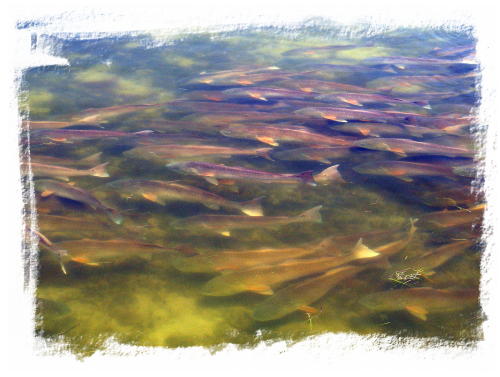 With the exception of some large breeder schools found out in the open water, most of the redfish you find now are in singles laying up or in small groups on the move. The east side of both the lagoons seem to be the most productive for redfish schools and sea trout. With the exception of some large breeder schools found out in the open water, most of the redfish you find now are in singles laying up or in small groups on the move. The east side of both the lagoons seem to be the most productive for redfish schools and sea trout.The sea trout are still hitting and for me, are great fun on top water plugs such as Chug Bugs, Zara Spook Jr.s and Skitter Walks.
These top water plugs usually produce larger fish and because this past year's freeze has hit the snook and sea trout populations in both lagoons pretty hard; you don't get as many hits as you normally expect for this time of year. Hopefully next year we will begin to see more and larger fish.
Quiet approaches, longer casts with lighter lines and slower retrieves will be the name of the game as the waters start getting clearer during the colder months.
The slot size reds that have been hammered throughout the summer months by fishermen using artificial baits are more receptive to eating live bait such as finger mullet, pigfish, pinfish, or live and dead shrimp.
Rigged with a circle hook and free lined or suspended under a Cajun Thunder rig; you will pick up reds and trout in water less than two feet deep. Fish the pot holes and drop offs next to the shallow flats and you should have no problem catching fish. The eastern shoreline of the Indian River north of S.R. 520 is still yielding sea trout that are averaging 17 inches. Most of these larger fish are being caught around schools of baitfish using small topwater lures fished slow on light tackle. Remember that big trout and especially big redfish require a really slow lure presentation. They don't like to waste energy chasing down their food. Nothing beats a fresh cut chunk of ladyfish on the bottom, if you want to catch a really big "bull" redfish. 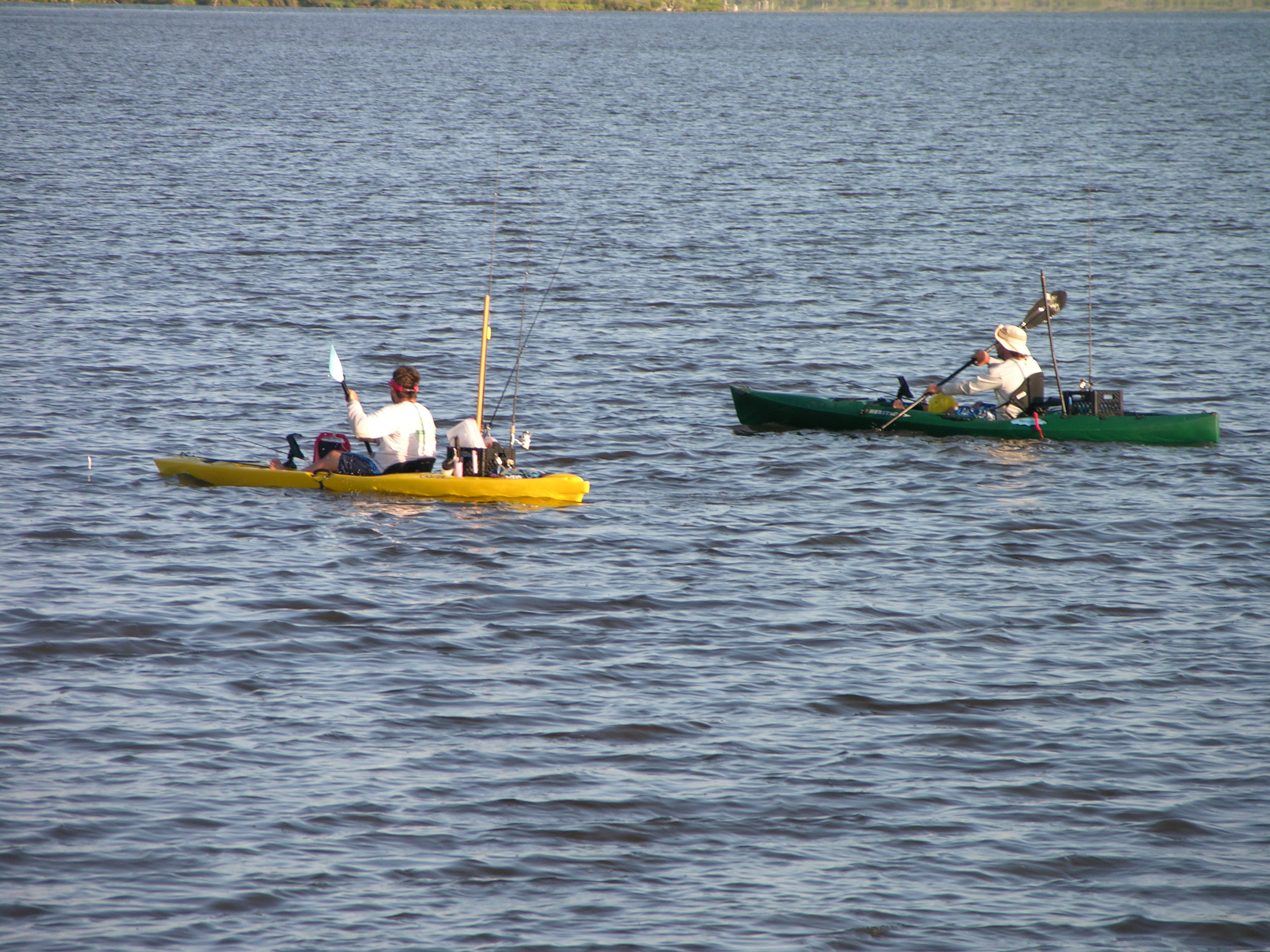 With the higher water levels, Kayakers have been accessing some great shallow water fishing in the mudflats where they previously had no access. With the higher water levels, Kayakers have been accessing some great shallow water fishing in the mudflats where they previously had no access.The Peacocks Pocket area, Gator Creek, and the northeastern Shiloh Marsh Road areas of the Indian River Lagoon are prime for kayakers sight fishing for large black drum, redfish and sea trout.
Kayaks have the advantage of getting into really shallow waters that no fisherman or flats boat can venture into. If you have an interest, there are several places in Titusville, Fl where you can rent a kayak and try it out for yourself.
Haulover Canal is always good fishing and October will be no different. Black drum have been biting well on cut mullet rigged on a circle hook near the eastern end of the canal and the bite should continue well into the coming month. 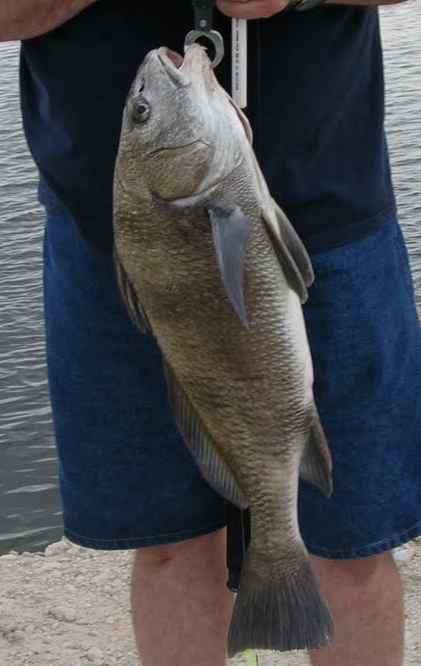 During low light conditions and close to dusk, you should be able to catch fish measuring up to 20 inches near the eastern
end of the canal on cut mullet or lady fish. During low light conditions and close to dusk, you should be able to catch fish measuring up to 20 inches near the eastern
end of the canal on cut mullet or lady fish. These smaller fish put up a respectable fight on light
tackle and are pretty good on the table when filleted, rolled in crushed saltines and deep fried. Fresh chunks of cut mullet, lady fish and blue crabs can be always be used in the Haulover Canal to catch large bull reds and black drum in the over 36" category.
The canal acts as a marine Interstate Highway between the Mosquito Lagoon and the north Indian River where your have a good chance of catching redfish, black drum, snook, sea trout, gag grouper, mangrove snapper and tarpon almost any time of the year. ________________________
Port Canaveral jetties will continue to produce good sized mangrove snapper throughout the month of October. They continue to feed on live shrimp during the early morning hours until mid-morning and in the evenings. Although they only average about thirteen inches, they are fun to catch on light tackle and are great eating.
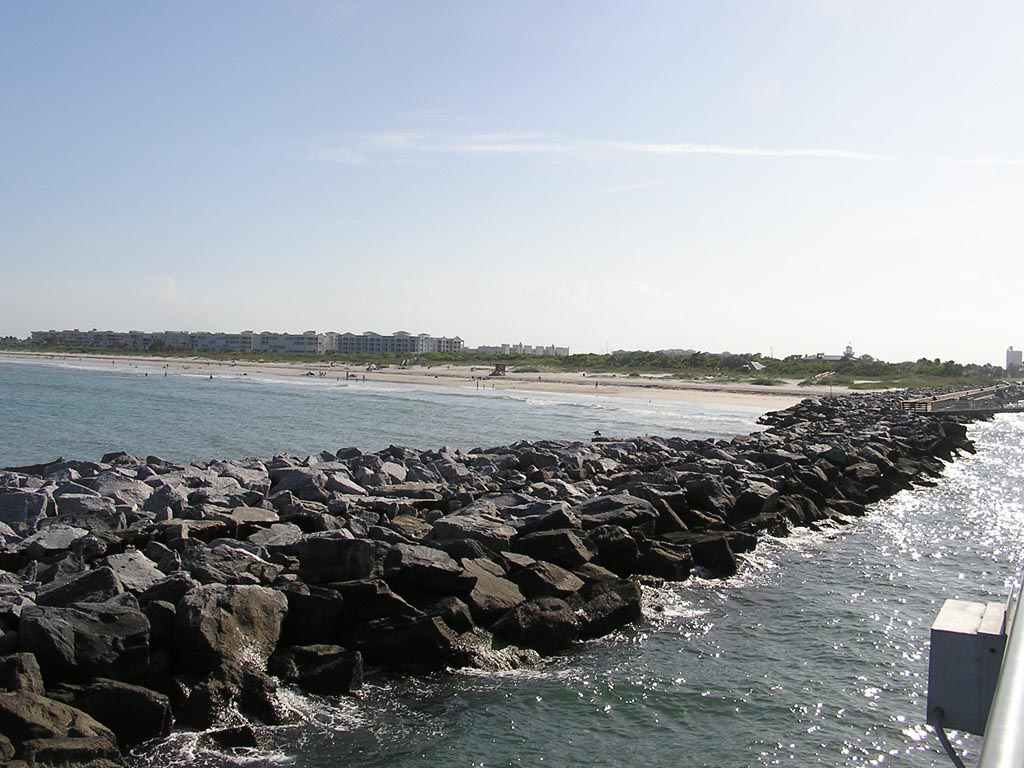 Snook have also been feeding on live mullet near the jetties at Port Canaveral and along the beaches where they can find schools of bait fish. Snook have also been feeding on live mullet near the jetties at Port Canaveral and along the beaches where they can find schools of bait fish. They are being caught on select size live shrimp, mullet and live pinfish.
In order to minimize break offs, most of the live bait fishermen use circle hooks with at least 25 lb test fluorocarbon leaders and 30 lb test Power Pro line. Large Snook over 30 inches have a hard time refusing a free lined pinfish on this rig.
_________________________
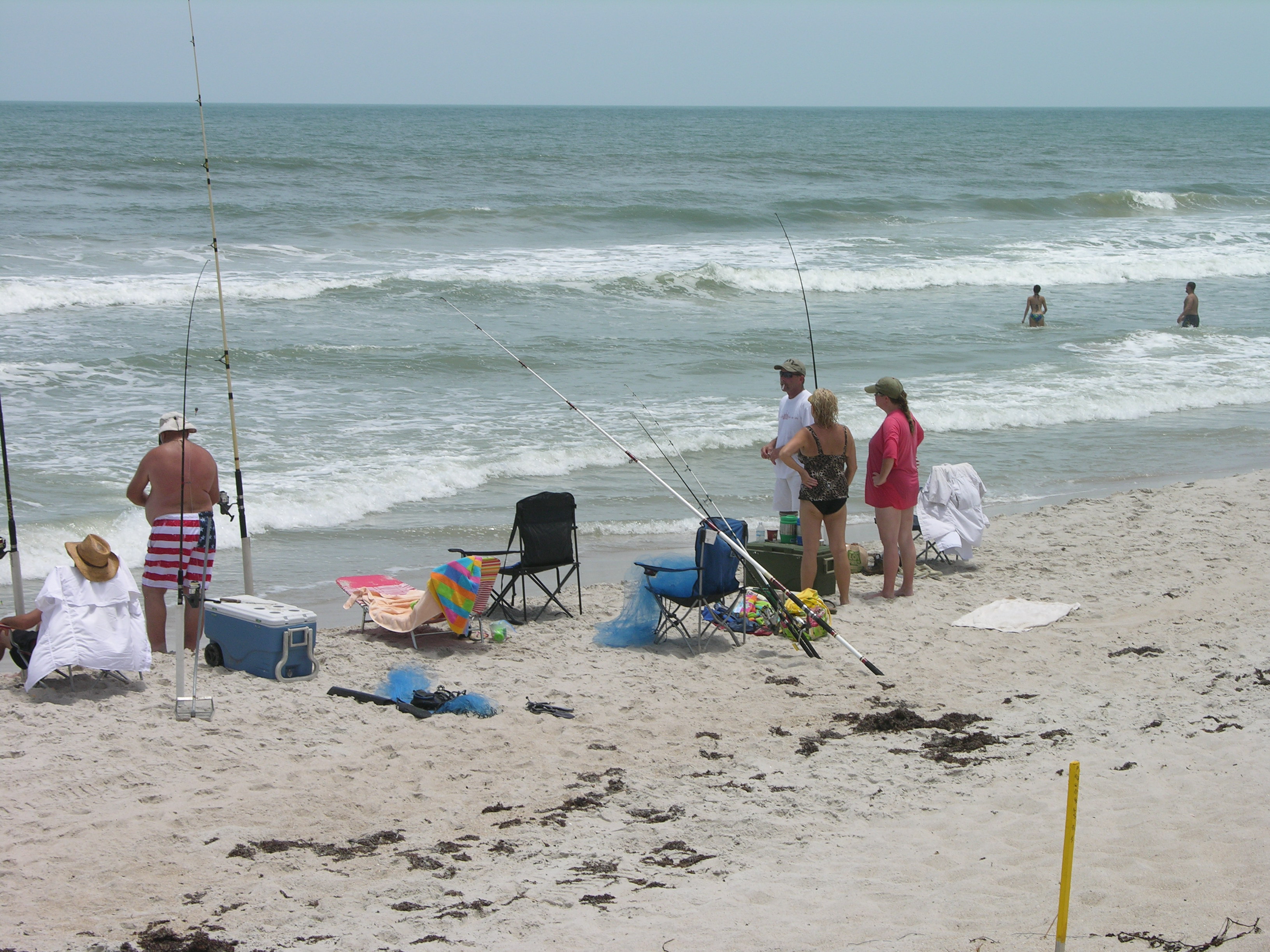 Playalinda Beach surf fishermen will have fun with bluefish and Spanish mackerel that are following the southern migration of bait fish along the beaches. Playalinda Beach surf fishermen will have fun with bluefish and Spanish mackerel that are following the southern migration of bait fish along the beaches.Schools of large black mullet have been working south along the beach and should attract larger predatory fish throughout the upcoming month.
The Black mullet are the larger of our mullet species, typically running in the 8 to 15 inch size, and are now migrating south to spawn.
The smaller silver mullet are a tropical species, which have not yet been flushed out of the lagoons. The silver mullet (finger mullet) make up the bulk of the mullet migration, and should be leaving the shelter of the lagoon flats for their run south at any time.
Right now along the beaches near shore, a good number of Spanish mackerel schools are feeding on glass minnows during first light.
Spanish mackerel are very aggressive and easy to catch. They will eagerly take a DOA CAL on a jig head fished with a very fast retrieve, small spoons, or on fly tackle, any small fly resembling a glass minnow.
When fishing for toothy critters like Spanish mackerel or bluefish using monofilament or fluorocarbon leaders, it's important to reel your lure fast to avoid getting cut off. Using long shank hooks also helps. Playalinda Beach is relatively deserted during October so you can pretty much have any fishing area you like. Only a few fishermen and surfers will keep you company as you try your luck. Hurricane season is still with us, so you can expect heavier than normal surf. Be careful and watch for rip currents.
_________________ Offshore Fishing Because of the back to back hurricanes and storms we have been getting in the Atlantic, there isn't much information the old crystal ball can offer for October offshore fishing out of the Port.
The storms have brought in a lot of debris from the east side of the Gulf stream that harbors bait fish that schools of dolphin and other predators zone in on, but not many of the charters captains I spoke with are bothering to burn gas to fish for them in rough sea conditions.
_________________________
Until next time, Tight Lines To All!
| ||||||||

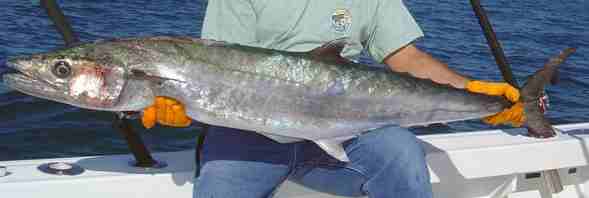 Scattered king mackerel should still be hitting slow trolled baits in the 40- to 90-foot reefs, wrecks and shoals from due east of the Port northward to Chris Benson Reef.
 | Link One | Link Two | Link Three | Link Four | Link Five | Unsubscribe to this newsletter |